
Last updated November 14, 2026
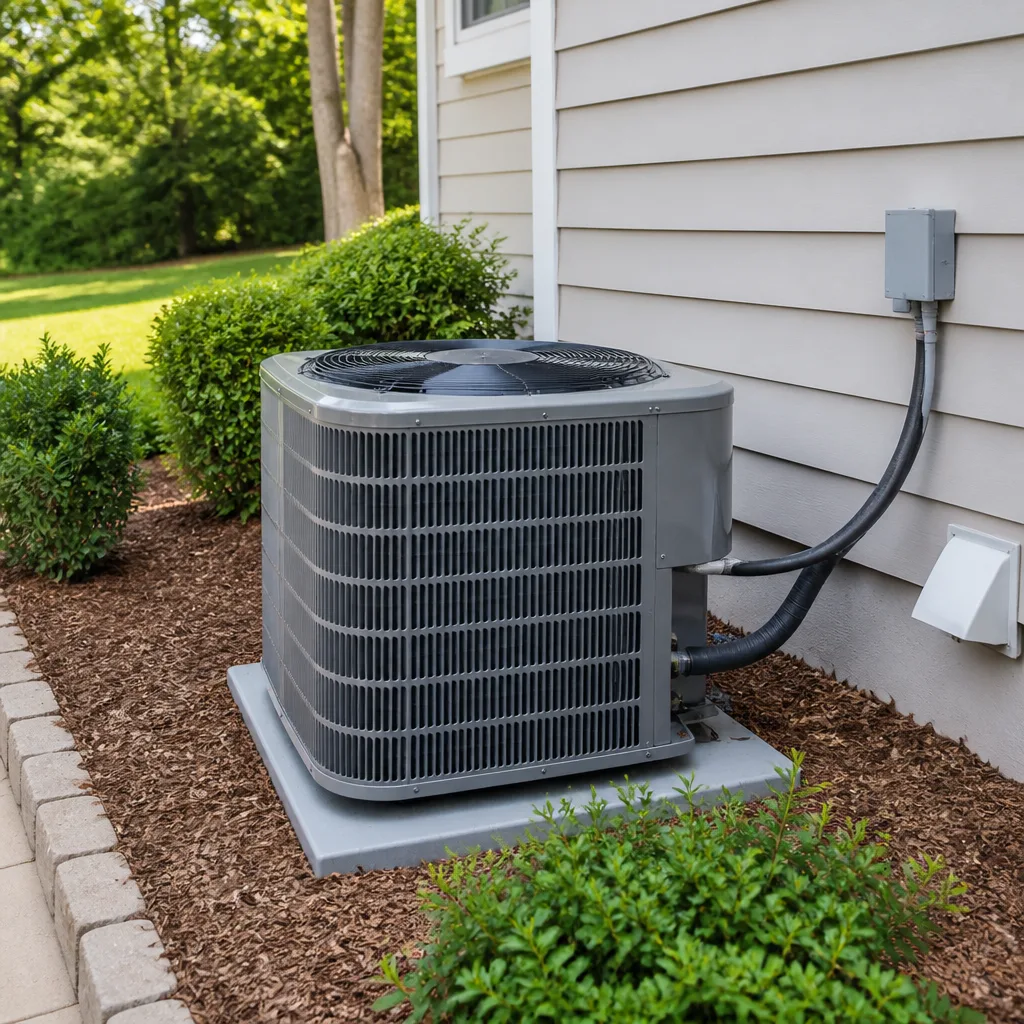 AC repair
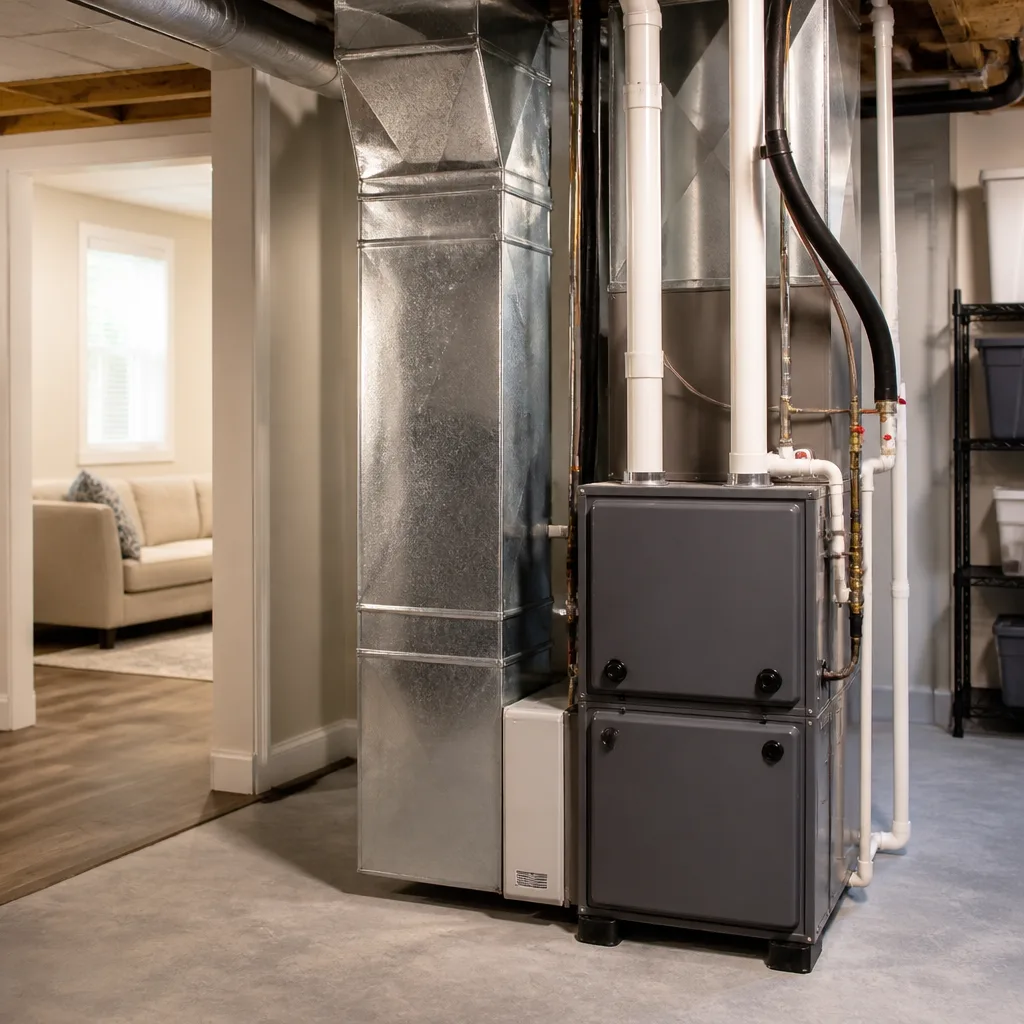 Furnace & heating
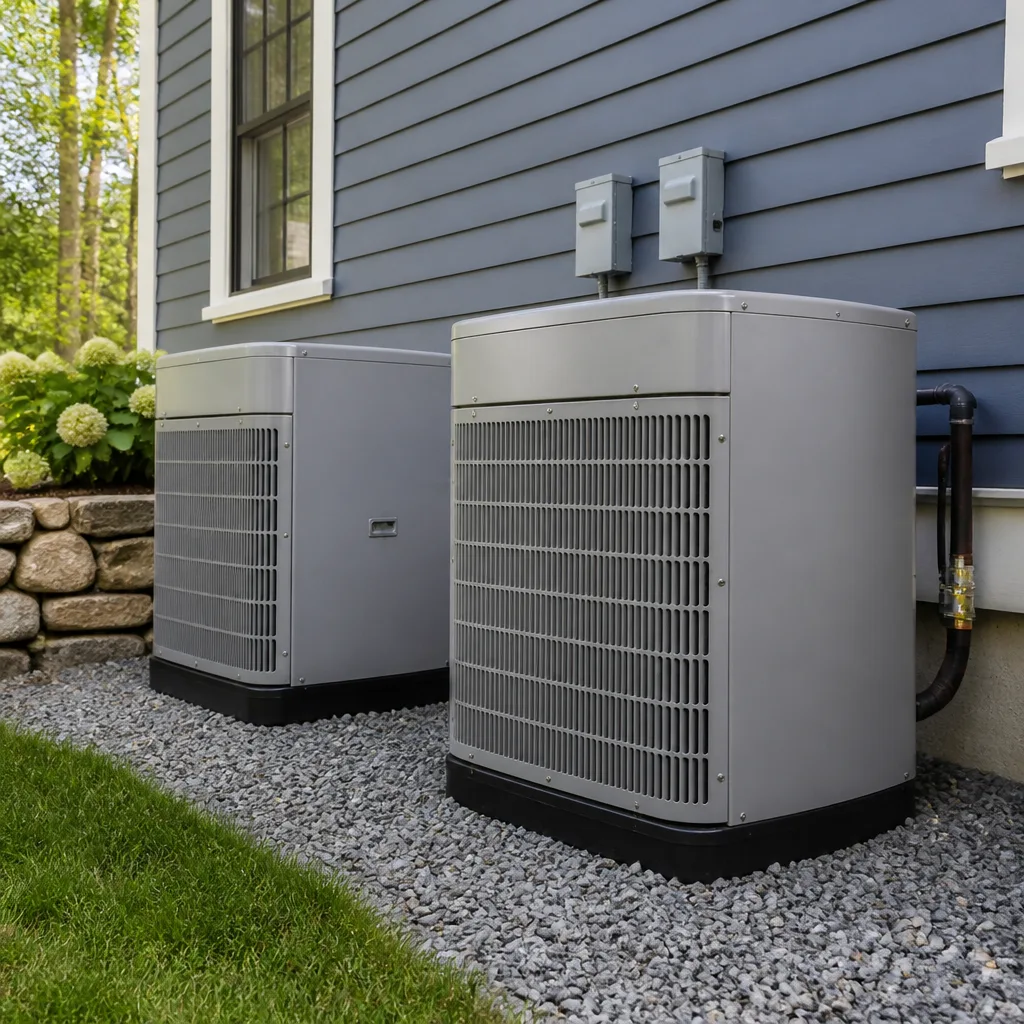 Heat pumps
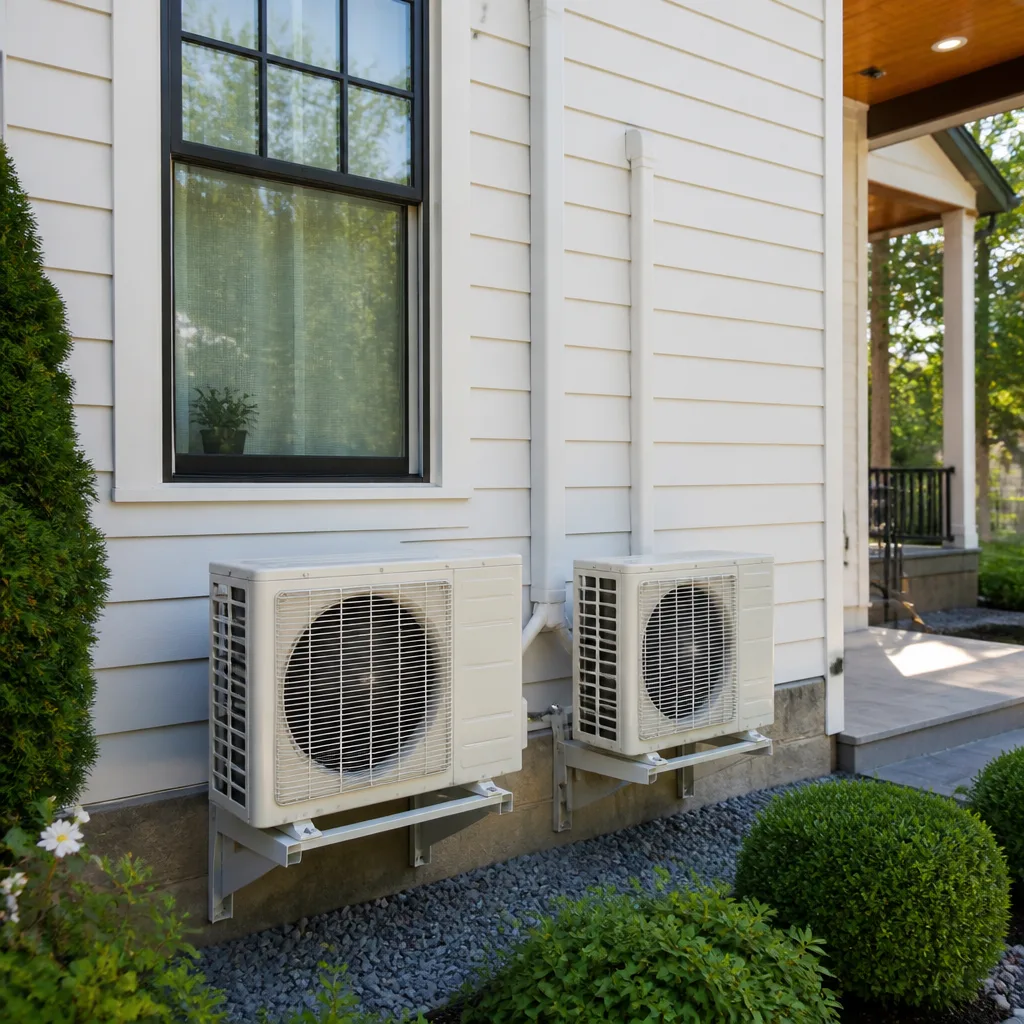 Ductless mini splits
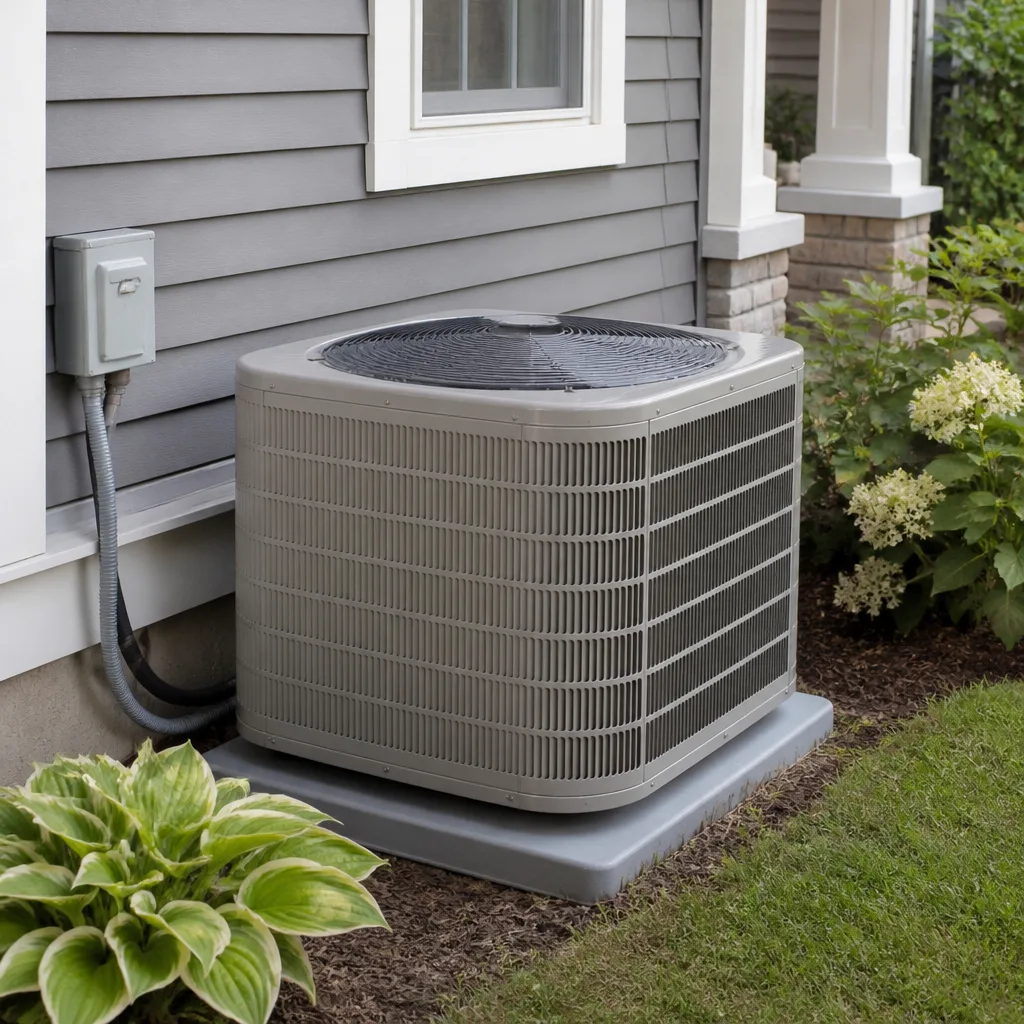 Carrier
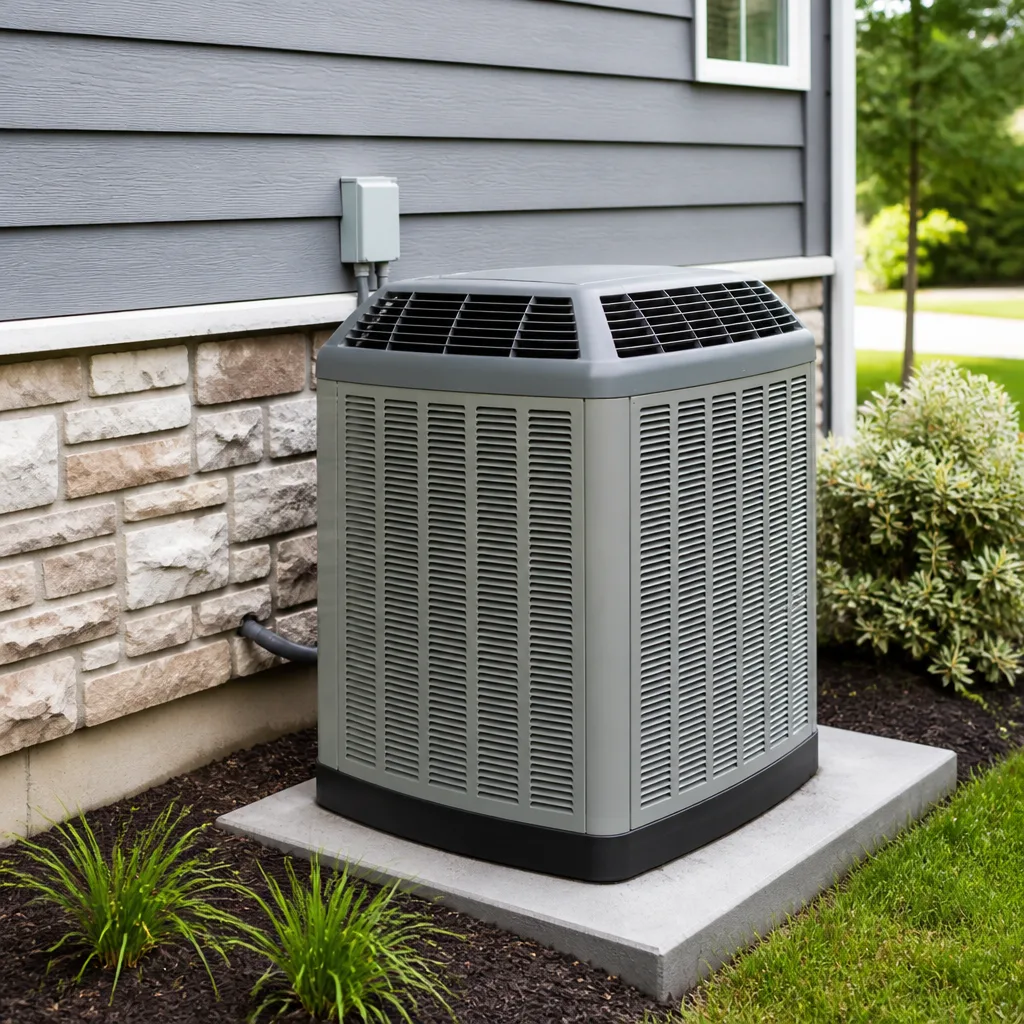 Trane
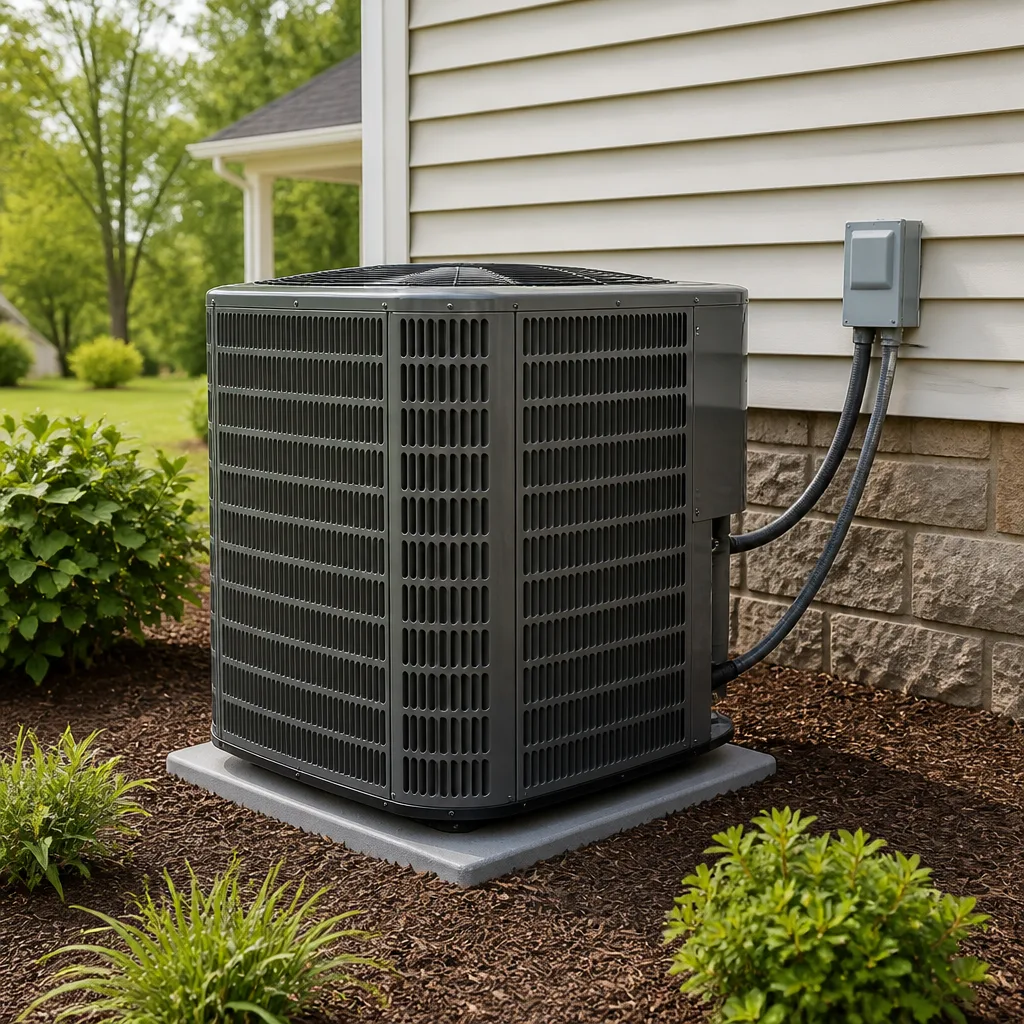 Goodman
Seasonal tune-up and full diagnostic on your Carrier, Trane, or Goodman system - readings shown to you before any repair is proposed
Diagnosis first, numbers second - you approve the repair price before a single part goes in.
Get your free estimateChoosing the Right HVAC Brand: A Buyer’s Guide for North Las Vegas
Three of the most heavily marketed HVAC brands in Nevada are manufactured by the same two parent companies, often using shared component suppliers and nearly identical internal designs. The brand decision you think you’re making is often not the decision you’re actually making. What actually determines whether your North Las Vegas system keeps you cool through a 110-degree July afternoon is not the logo on the cabinet. It’s the quality of the installation, the specific model line you choose, and whether a qualified technician can get parts and diagnose the unit when something fails at 4pm on a Tuesday. This guide strips away the marketing and explains what to actually optimize for.
Quick Answer
The best HVAC brand in North Las Vegas is the one that matches your budget to a properly sized system, comes with a compressor warranty of at least 10 years, and is supported by a technician who works on that brand regularly, not one tied to a single manufacturer’s dealership program. Carrier, Trane, Lennox, and Goodman all build reliable equipment when installed correctly, but the brand name matters less than the model line, the installer’s workmanship, and your future service options. Prioritize those three things and you’ll make a smarter purchase than someone who walks in asking for a specific logo.
Styles & brands we work with
- AC repair
- Furnace & heating
- Heat pumps
- Ductless mini splits
- Carrier
- Trane
- Goodman
Table of Contents
- The Manufacturer Consolidation Map: What You’re Really Buying
- What Actually Matters More Than the Brand Name
- SEER2 Ratings and North Las Vegas’s 2,100-Hour Runtime Reality
- Coil Coatings, Hard Water, and Mojave Dust: The Local Durability Factors
- Compressor Warranty Terms: The One Line on the Spec Sheet That Costs You Real Money
- The Service Availability Question: Can You Actually Get This Fixed Here?
- Budget, Mid-Tier, and Premium: A Lifecycle Cost Comparison for North Las Vegas
- Why Single-Brand Contractors Limit Your Future Options
The Manufacturer Consolidation Map: What You’re Really Buying
Walk through any home improvement store or browse any HVAC contractor’s website and you’ll see a dozen brand names competing for your attention. Dig one layer deeper and the picture changes. Carrier and Bryant are both owned by the same parent company and share significant component sourcing, including compressors and control boards. Trane and American Standard come from the same manufacturing line with different badges and paint colors. Daikin owns Goodman and uses shared engineering across both labels. Lennox and Rheem remain more independent, but they still buy compressors, motors, and capacitors from many of the same third-party suppliers that serve the rest of the industry.
What this means for a North Las Vegas homeowner is simple. When you compare Carrier against Bryant, or Trane against American Standard, you are frequently comparing two versions of the same underlying machine. The differences come down to which features the company chooses to include at a given price point, how the warranty is structured, and which contractors are authorized to sell and service the badge. The consolidation is not a secret. The manufacturers just prefer you focus on the nameplate rather than the bill of materials. In our experience, homeowners who research component-level differences make better choices than homeowners who chase a brand they saw in a commercial. We have worked on systems from Carrier, Trane, Lennox, Goodman, Rheem, York, Daikin, Bryant, and American Standard, and the failures we see are rarely brand-specific. They are almost always installation-specific or maintenance-specific.
So what should you actually compare? Three things. First, the compressor manufacturer and its rated capacity for your specific model. Second, the coil construction and coating, which matters enormously in a desert climate with hard water. Third, the parts availability network in your zip code, because a brand with no local parts warehouse is a brand that leaves you without cooling for days while a capacitor ships from three states away. The nameplate is the least informative part of the entire purchase.
What Actually Matters More Than the Brand Name
Every major manufacturer builds a full product range from stripped-down entry units to fully featured variable-speed systems. The spread in quality between a builder-grade Goodman and a top-tier Carrier Infinity is far wider than the spread between Carrier and Trane at the same feature level. When we talk to homeowners in North Las Vegas who are replacing a system, the most useful conversation always centers on four factors that have nothing to do with brand loyalty.
Manual J load calculation. This is the engineering process that determines how many tons of cooling your specific house needs based on square footage, insulation, window orientation, ceiling height, and the local climate. A system that is oversized will short-cycle, fail to dehumidify properly, and wear out its compressor prematurely. A system that is undersized will run constantly and still not hold temperature on a 112-degree day. The load calculation matters more than the brand. Always ask a contractor to show you their calculation, not their preferred manufacturer chart.
Installation quality. The same exact condenser will perform completely differently depending on whether the installer pulled a proper vacuum on the refrigerant lines, set the correct subcool or superheat, sealed the duct connections, and leveled the pad. A beautifully engineered Trane installed by someone who skipped the evacuation pump will fail years before a basic Goodman installed by a detail-obsessed technician. The installer is the most important brand in the transaction.
Model line, not brand. Every manufacturer has an entry line, a mid-tier line, and a premium line. Ask the installer to quote you two or three lines from the same manufacturer and compare the differences in compressor type, blower motor type, cabinet construction, and controls. Then do the same with a different brand. You will often find the mid-tier line from one manufacturer outperforms the entry line from a “premium” label for the same money.
Your service future. This is the piece most buyers skip. When you buy a system, you are also choosing a service relationship for the next decade or more. If you buy from a contractor who only carries one brand, every future repair call runs through that contractor’s pricing and availability. If you buy through a multi-brand contractor, you keep your options open. We recommend homeowners think of the purchase as a system plus a service path, not just a cabinet and a coil.
SEER2 Ratings and North Las Vegas’s 2,100-Hour Runtime Reality
SEER2 is the current federal efficiency metric for air conditioners and heat pumps, introduced to reflect more realistic duct and pressure conditions than the older SEER rating. In North Las Vegas, your system will run roughly 2,100 hours per year when you combine the long shoulder seasons with the peak summer demand from mid-May through late September. That runtime dwarfs what a system in a milder climate will experience, which means efficiency differences compound faster here than almost anywhere else in the country.
Here is the straightforward math. Moving from a 14.3 SEER2 system to a 16 SEER2 system on a 2,100-hour annual runtime typically cuts cooling electricity use by about 10 to 12 percent. On a home cooling bill that averages $200 to $350 per month during the five warmest months in North Las Vegas, that translated into several hundred dollars per year in savings at typical NV Energy residential rates. Move up to a high-efficiency variable-speed system in the 18 to 20 SEER2 range and the savings grow accordingly, but so does the upfront cost.
The honest takeaway is that efficiency is worth paying for up to a point. Here’s how we frame the decision for homeowners:
- Entry efficiency, under 15 SEER2: Lowest installed cost, oldest compressor technology, shortest average lifespan in a hot climate. Fine for a rental unit or a house you plan to sell within five years.
- Mid efficiency, 15 to 17 SEER2: The sweet spot for most North Las Vegas homeowners. Meaningful energy savings over entry units, more robust compressor protection, and a price that doesn’t require an eight-year payback to make sense.
- Premium efficiency, 18 SEER2 and above: Variable-speed compressors and communicating controls. Best comfort and quietest operation, but the premium you pay often offsets the incremental energy savings unless you plan to stay in the home for a decade or more.
One more point about SEER2. A high-efficiency system that is not sized correctly will never hit its rated efficiency. A 20 SEER2 unit with an oversized compressor running short cycles will use more energy than a correctly sized 16 SEER2 unit. Efficiency starts with the load calculation.
Coil Coatings, Hard Water, and Mojave Dust: The Local Durability Factors
North Las Vegas HVAC systems face two environmental stressors that most buying guides completely ignore. The first is Mojave Desert dust. The second is the hard water coming out of the Colorado River supply that serves the Las Vegas Valley. Both of these have a direct effect on how long your equipment lasts, and they matter far more than which brand logo is on the cabinet.
Evaporator coils in North Las Vegas accumulate dust faster than in most climates because the air itself carries fine particulate from the surrounding desert. When that dust combines with the condensation a coil naturally produces, it forms a paste that clings to the fins and insulates the coil from the air passing over it. That means the coil cannot absorb heat effectively, the system runs longer to do the same work, and the compressor works harder than it should. The solution is regular coil cleaning and high-quality filtration, but coil design and coating also matter. Some manufacturers coat their evaporator coils with an anti-corrosion treatment that reduces the damage from that dusty, moisture-laden environment. Others build the coil with aluminum fins that resist corrosion better than older copper-aluminum combinations. When you are comparing models, ask about the coil construction and whether the manufacturer applies a protective coating. It is a spec-sheet detail that translates into real lifespan differences in a desert climate.
Hard water affects systems differently. North Las Vegas water contains high levels of calcium and magnesium, which show up as scale inside anything that moves water through a heat exchanger. This matters most for evaporative coolers, but it also affects condensing furnaces and heat pump water heaters if those are part of your system. For air conditioners, the bigger concern is the outdoor condensing coil exposed to wind-blown dust and the evaporator coil dealing with filtered indoor air. Ask your installer how the model you are considering handles dust loading and whether the coil has a coating that can be cleaned without damaging the fins. A coil you can safely clean every two years will outlast one that corrodes the first time a technician tries to wash it.
Compressor Warranty Terms: The One Line on the Spec Sheet That Costs You Real Money
The compressor is the single most expensive component in your air conditioner. When it fails outside of warranty, the repair bill runs into the thousands of dollars, and in many cases it makes more sense to replace the entire outdoor unit than to install a new compressor. That is why the compressor warranty clause is the most important line on the spec sheet, and why you should read it carefully before you sign anything.
Here is what to look for. A 10-year compressor warranty is the baseline you should demand from any mid-tier or premium system sold in North Las Vegas. Entry-level systems sometimes carry a five-year compressor warranty, which means you are carrying the replacement risk starting in year six, exactly when a compressor stressed by desert heat is most likely to fail. The warranty is almost always conditional. That condition is registration. Most manufacturers require you to register the system within 60 or 90 days of installation to get the full 10-year coverage. If you skip the registration, the warranty falls back to a five-year base term. We have seen homeowners lose five years of coverage because the contractor never told them to register.
The warranty only covers the part, not the labor. A 10-year compressor warranty means the manufacturer will send a new compressor at no charge. It does not mean the technician who diagnoses the failure, recovers the refrigerant, swaps the compressor, and recharges the system works for free. That labor bill is yours, and it can run $1,500 to $2,500 for a full compressor replacement depending on the system. Some manufacturers offer extended labor warranties through their dealer programs, but those are separate purchases, usually with their own terms and limitations. When you compare brands, compare the compressor warranty term, the registration deadline, and the cost of extended labor coverage. Those three numbers tell you more about your future repair risk than any marketing brochure.
The Service Availability Question: Can You Actually Get This Fixed Here?
Before you commit to any HVAC brand in North Las Vegas, answer this question directly: who will fix it when it breaks? A system is only as reliable as the parts and labor network that supports it. A brand with great marketing and zero local parts inventory is a brand that leaves you sleeping in a hot house while a capacitor ships from a warehouse in Texas.
Here is a four-step check you can run before you buy:
- Ask the contractor where their parts come from. A good HVAC contractor in North Las Vegas will know which supply houses stock parts for the brands they install. If the answer is “we order everything online,” that’s a red flag. Same-week repairs require local or regional parts distribution.
- Ask about common failure parts. Capacitors, contactors, fan motors, and control boards are the parts that fail most often. Ask whether these are stocked locally for the brand you are considering. If the common parts require a five-day order, every routine repair becomes a multi-day event.
- Ask how many technicians in the area service this brand. A brand with a narrow service network means you are tied to one or two contractors for the life of the system. That gives those contractors pricing power. A brand with broad service support keeps competition in the market.
- Ask whether factory authorization is required. Some brands require dealer authorization to perform warranty work. Others allow any licensed contractor to service the equipment while the parts warranty remains valid. You want a system that any competent technician can service without jumping through a manufacturer’s dealer program. That keeps your AC repair options open for the next 15 years.
Here is the honest truth about the North Las Vegas market. Carrier, Trane, Lennox, and Goodman all have strong parts distribution in the Las Vegas Valley. Most common repair parts are available same-day or next-day from supply houses around Las Vegas and North Las Vegas. The differentiation is not the parts network. It is the contractor network. When you choose a brand that multiple qualified technicians can service, you preserve the ability to get competitive pricing on future repairs.
Budget, Mid-Tier, and Premium: A Lifecycle Cost Comparison for North Las Vegas
Every HVAC brand markets itself as a premium product. The reality is that each manufacturer sells a range that spans from basic single-stage equipment to sophisticated variable-speed systems with communicating thermostats. Instead of comparing brands, compare tiers. Here is how we frame the three tiers for a typical 2,000-square-foot single-family home in North Las Vegas with a 2,100-hour annual cooling runtime.
Budget tier: 14 to 15 SEER2, single-stage compressor. Installed cost typically runs $8,000 to $11,000 for a complete system replacement including the condenser, evaporator coil, furnace or air handler, and installation labor. These systems use a single-speed compressor that is either on at full capacity or off. They cool effectively, but they cycle frequently, they don’t dehumidify as well, and they run louder than higher-tier systems. In a North Las Vegas summer, expect a lifespan of 12 to 15 years with good maintenance. If you plan to be in the home for five years or fewer, this tier keeps your upfront cost low and hands the future replacement to the next owner.
Mid-tier: 16 to 17 SEER2, two-stage compressor. Installed cost typically runs $11,000 to $15,000. Two-stage compressors run at about 65 percent capacity most of the time and only ramp to full output when the thermostat calls for maximum cooling. That means longer run cycles, better humidity control, quieter operation, and lower energy use than a single-stage unit. For a home you plan to stay in for 7 to 12 years, the mid-tier is usually the financially rational choice. The efficiency gain over budget equipment is real, and the compressor is engineered to handle the repeated start-stop cycles of a desert cooling season better.
Premium tier: 18 SEER2 and above, variable-speed compressor. Installed cost starts at $15,000 and can exceed $20,000 depending on the brand and the complexity of the installation. Variable-speed systems modulate the compressor and blower to match the exact cooling load at any given moment. They are the quietest, most comfortable, most efficient systems on the market. The catch is the payback. The incremental efficiency gain versus a good two-stage system is real but modest, and premium system repairs outside of warranty carry premium parts prices. If you plan to stay 15 years or more and comfort is a priority, the premium tier is worth it. If you are buying and selling on a shorter timeline, save the money.
Here is a simplified comparison in table form:
| Tier | Typical SEER2 | Installed Cost Range | Compressor Type | Best For |
|---|---|---|---|---|
| Budget | 14 – 15 | $8,000 – $11,000 | Single-stage | Short-term ownership, rental properties |
| Mid-tier | 16 – 17 | $11,000 – $15,000 | Two-stage | Most owner-occupied homes |
| Premium | 18+ | $15,000 – $20,000+ | Variable-speed | Long-term ownership, comfort priority |
These are estimated ranges based on typical installations we have seen in the North Las Vegas market. Your written estimate sets the final price, and it will depend on your specific ductwork, electrical panel capacity, and the condition of your existing lineset. Make sure the installer quotes the full scope, not just the equipment.
Why Single-Brand Contractors Limit Your Future Options
Many HVAC contractors in the Las Vegas Valley operate as authorized dealers for a single manufacturer. There is nothing inherently wrong with that model. A dealer who installs Carrier systems every day is genuinely good at installing Carrier systems. The problem is what happens after the installation, when something fails and you need AC installation support or emergency service. A tie to a single brand narrows your service path for the next decade.
A single-brand contractor earns the highest dealer margins by moving volume for that manufacturer. Their technicians train on that brand’s systems, their supply chain is built around that brand’s parts, and their warranty support runs through that brand’s dealer portal. When your system fails, they are the natural choice, which means you are effectively locked into their pricing and their schedule. You cannot easily call a different contractor for a second opinion because the dealer relationship makes them the default warranty handler. That is not malpractice. It is just the economics of the dealership model.
Our approach is different by design. Stratford AC Repair operates brand-agnostic by choice, qualified to service equipment from Carrier, Trane, Lennox, Goodman, Rheem, York, Daikin, Bryant, and American Standard. That means we recommend a fix based on what your system needs, not on which manufacturer’s marketing program we are participating in. It also means our technicians see how different brands fail in the field, which gives a realistic view of what breaks, what holds up, and what is worth your money. Brand-neutral diagnosis follows the problem, not a preferred manufacturer.
When you are choosing an installation contractor, ask whether they can service the other major brands when the time comes. If the answer is no, you are choosing a service relationship, not just an installation. You want a contractor whose skill set covers whatever you already own, whether or not they sold it to you. That is the whole point of North Las Vegas HVAC work: systems break on their schedule, not yours, and you want the first call to be the one that fixes it.
Common Mistakes to Avoid
- Buying the brand before the load calculation. Choosing a Trane because a neighbor has one, then skipping the sizing calculation, means you get an expensive system that is wrong for your house. The brand comes last. The engineering comes first.
- Skipping warranty registration. The manufacturer gives you a window, often 60 days, to register and get the full 10-year compressor warranty. Miss it and you are left with a five-year base term without even realizing it.
- Comparing quotes by price alone. A $9,500 quote and a $13,500 quote for the same SEER2 rating are not the same job. The difference is ductwork scope, coil quality, labor warranty, and whether the contractor pulled a permit. Ask for a scope breakdown.
- Ignoring the service network. A premium brand with limited local service support is a liability in July. Before you buy, verify that common parts are stocked in the Las Vegas Valley and that multiple technicians can service the unit without dealer authorization.
- Opting for an oversized system. Some contractors size up to be safe. An oversized system short-cycles, runs inefficiently, and dies early. Ask to see the Manual J calculation, not a rule-of-thumb number based on square footage.
- Trusting brand reputation over coil construction. The Mojave dust and hard water in North Las Vegas punish coils faster than most climates. A mid-tier coil with a protective coating may outlast a premium coil without one in this environment.
- Neglecting your furnace while shopping for an AC. If you have a gas furnace paired with the AC, the blower and heat exchanger are part of the same system. Replacing the condenser without evaluating the furnace means a mismatched system that costs more to run. One call should cover both.
See the difference
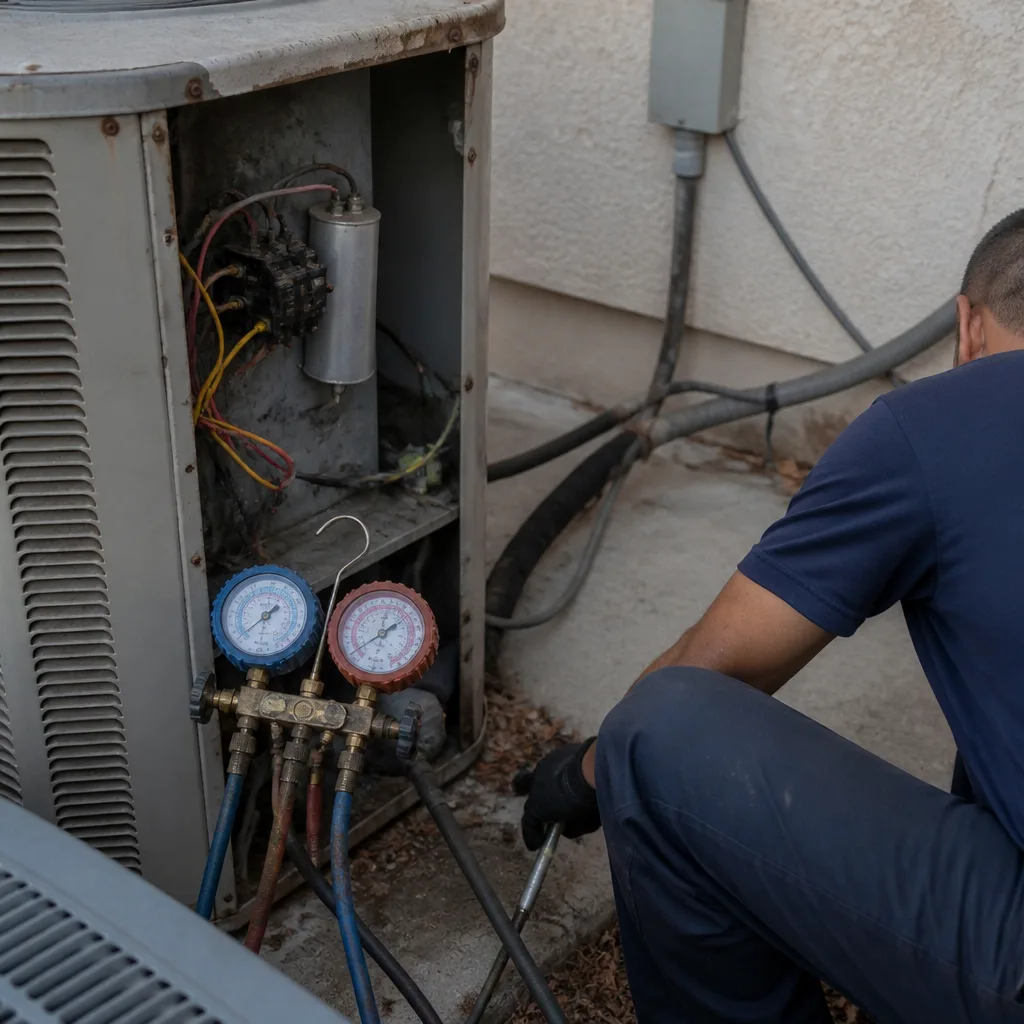 Before
 After
 Before
 After
 Before
 After
When to Call a Professional
You are not expected to spec your own HVAC system. You should understand the tiers, the warranty terms, and the service questions, but the load calculation, the duct evaluation, and the installation itself require a licensed technician with real field experience. Call a professional when your system is more than about 12 years old and needs a repair that costs more than a third of a replacement, when your cooling bills climb even though the system runs normally, or when your system cannot hold temperature below about 78 degrees on a typical North Las Vegas summer afternoon. Those are the moments when the brand conversation becomes a replacement conversation, and that is a conversation worth having with someone who works on every major brand rather than one. Stratford AC Repair offers free estimates in North Las Vegas. Call (844) 731-3077 and we will walk you through what your system actually needs.
Frequently Asked Questions
In a North Las Vegas climate with 2,100 annual cooling hours, Carrier, Trane, Lennox, and Goodman all build dependable equipment when installed correctly. The best brand is the one matched to a properly sized system with a 10-year compressor warranty and a service network that supports your future repairs. Focus on the model line and the installation quality, not the nameplate. Call (844) 731-3077 for a straight answer about what fits your house.
A mid-tier system in the 16 to 17 SEER2 range is the sweet spot for most North Las Vegas homeowners, balancing a reasonable installed cost against meaningful energy savings over a 2,100-hour cooling season. Premium 18-plus SEER2 systems earn their price only if you stay in the home a decade or more. The right answer depends on your timeline and your current system. We can help you run the numbers.
For a typical 2,000-square-foot home in North Las Vegas, expect a complete system replacement to land between $8,000 and $11,000 for a budget single-stage system, $11,000 to $15,000 for a mid-tier two-stage system, and $15,000 to $20,000 or more for a premium variable-speed system. These are estimates. Your written quote sets the final price after we evaluate your ductwork and existing setup.
Not for routine repairs on most major brands. Any licensed contractor can service equipment from Carrier, Trane, Lennox, and Goodman without manufacturer dealer authorization, though warranty replacement parts may require filing through the manufacturer’s process. Choosing a contractor who works on nine major brands keeps your service options open instead of tying you to one dealer’s schedule and pricing.
Ask to see the Manual J load calculation. This is the engineering process that uses your home’s square footage, insulation levels, window orientation, and North Las Vegas climate data to determine the correct tonnage. If a contractor quotes a size based on square footage alone, get a second opinion. A wrong-size system costs more to run and fails sooner regardless of the brand.
In North Las Vegas, the two things that fail most often are capacitors. The extreme heat and dust shorten the life of these electrical components, and they are the most common reason a system stops cooling on a hot afternoon. The best defense is a pre-season check before peak summer demand, so a failing capacitor is replaced before it takes your system down. We recommend an early-spring check for exactly this reason.
The Bottom Line
Brand loyalty is a weaker strategy than most homeowners realize. The real decisions are the model line you choose, the load calculation behind the sizing, the warranty registration you actually complete, and the service network you preserve by avoiding a single-brand lock-in. In North Las Vegas, where your system runs 2,100 hours a year through Mojave dust and hard-water conditions, the spec-sheet details matter more than the logo. Buy the system, not the sticker. And call us when you want an honest, brand-neutral read on what you already have and what it will cost to keep it running. We work on nearly every major brand, including yours.
Written by the team at Stratford AC Repair, serving North Las Vegas since 2015.