
Last updated November 14, 2026
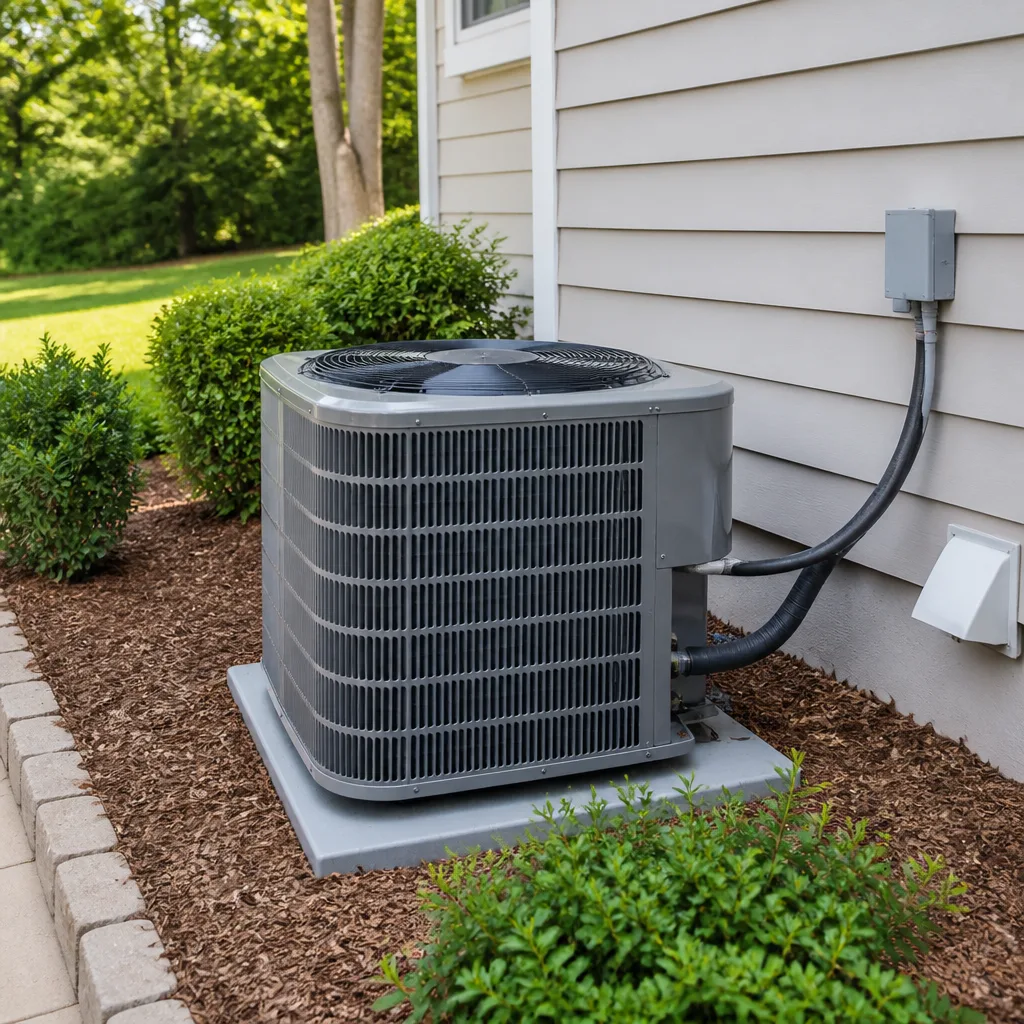 AC repair
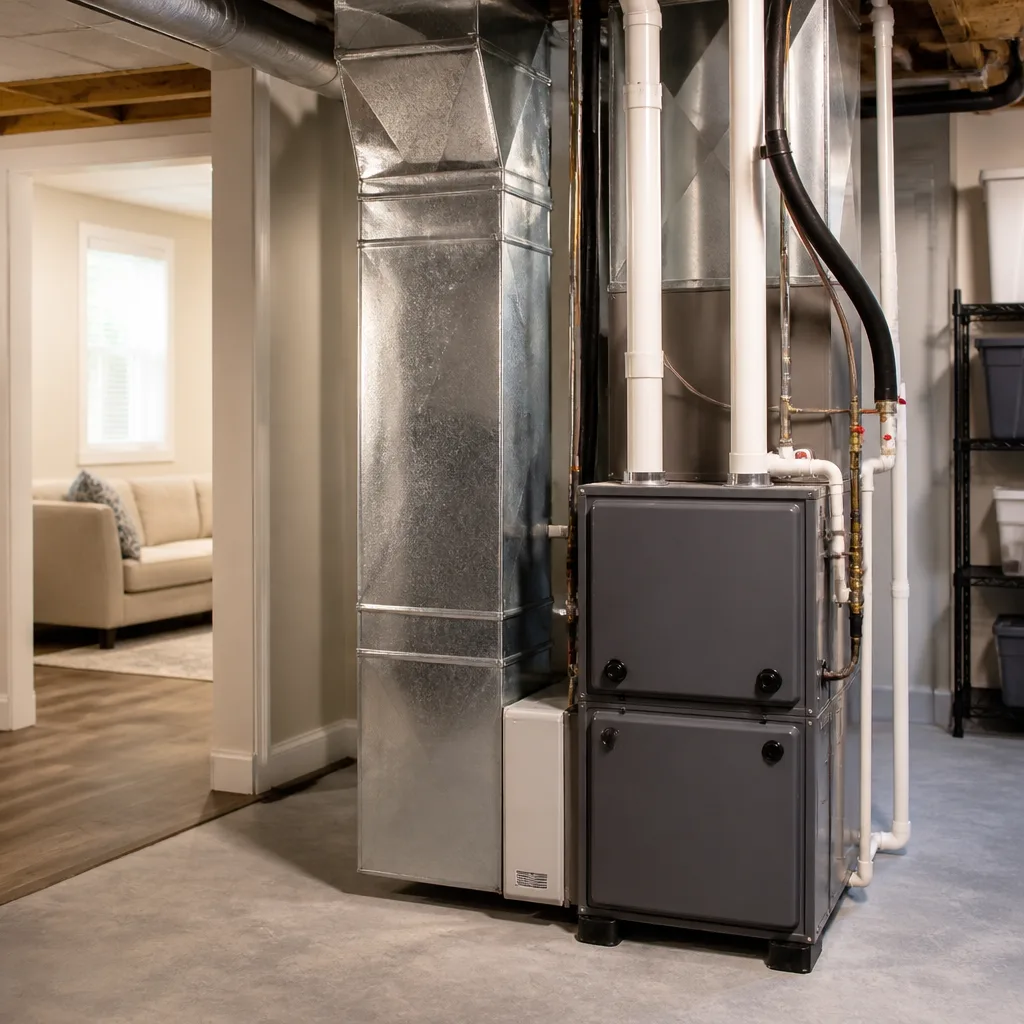 Furnace & heating
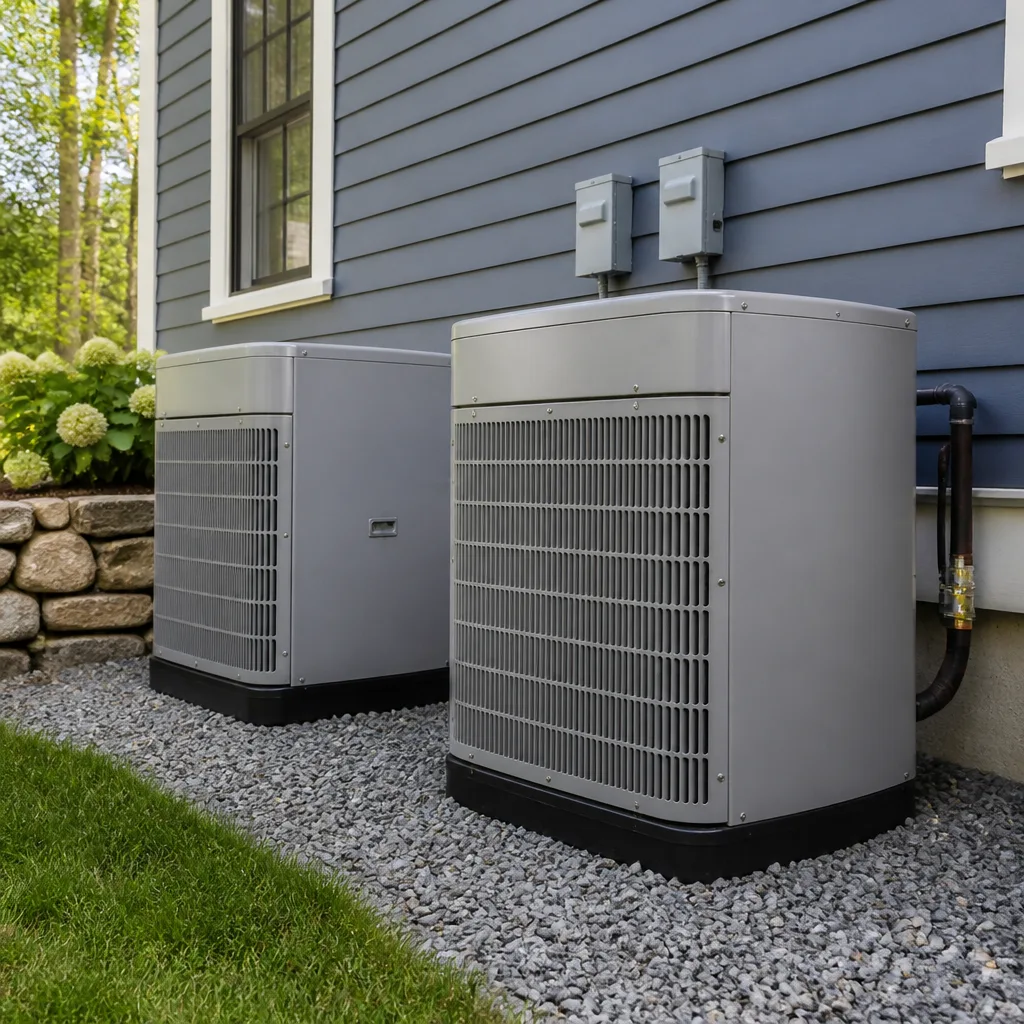 Heat pumps
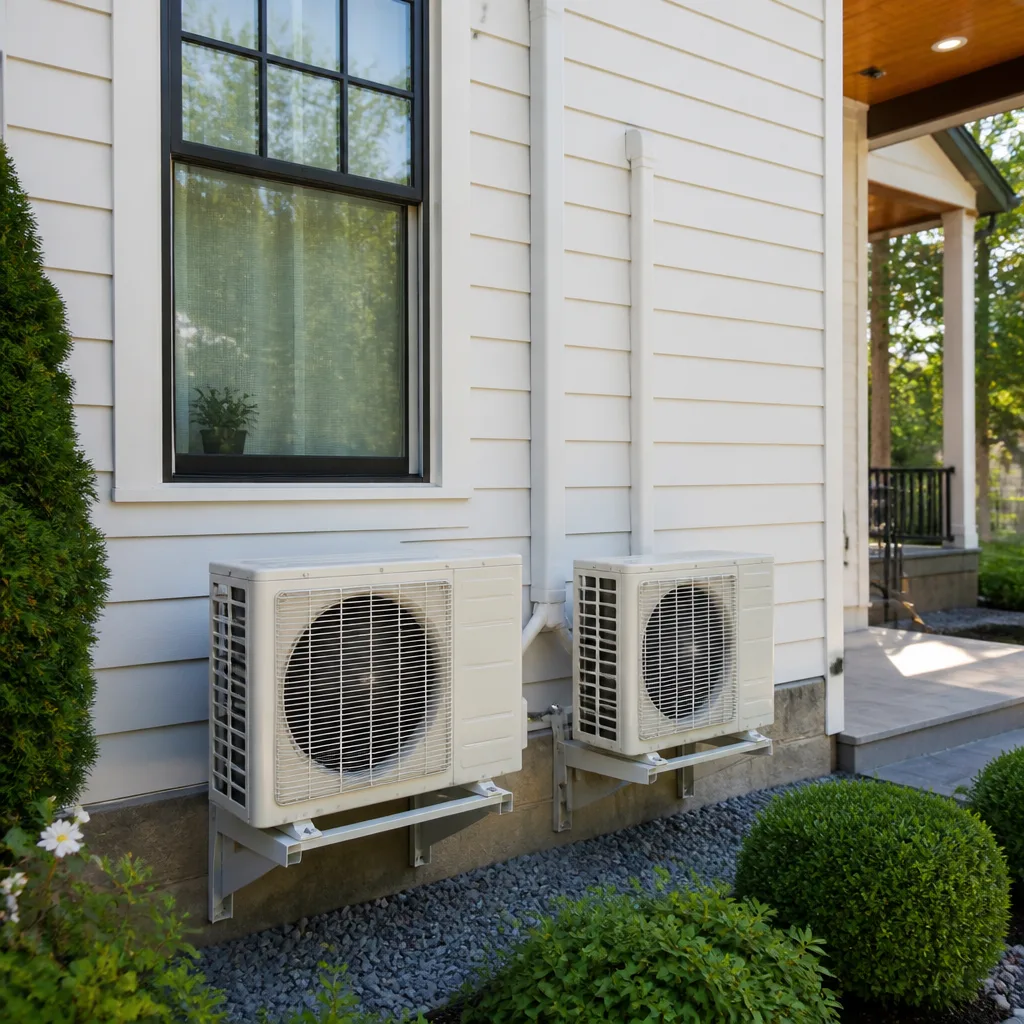 Ductless mini splits
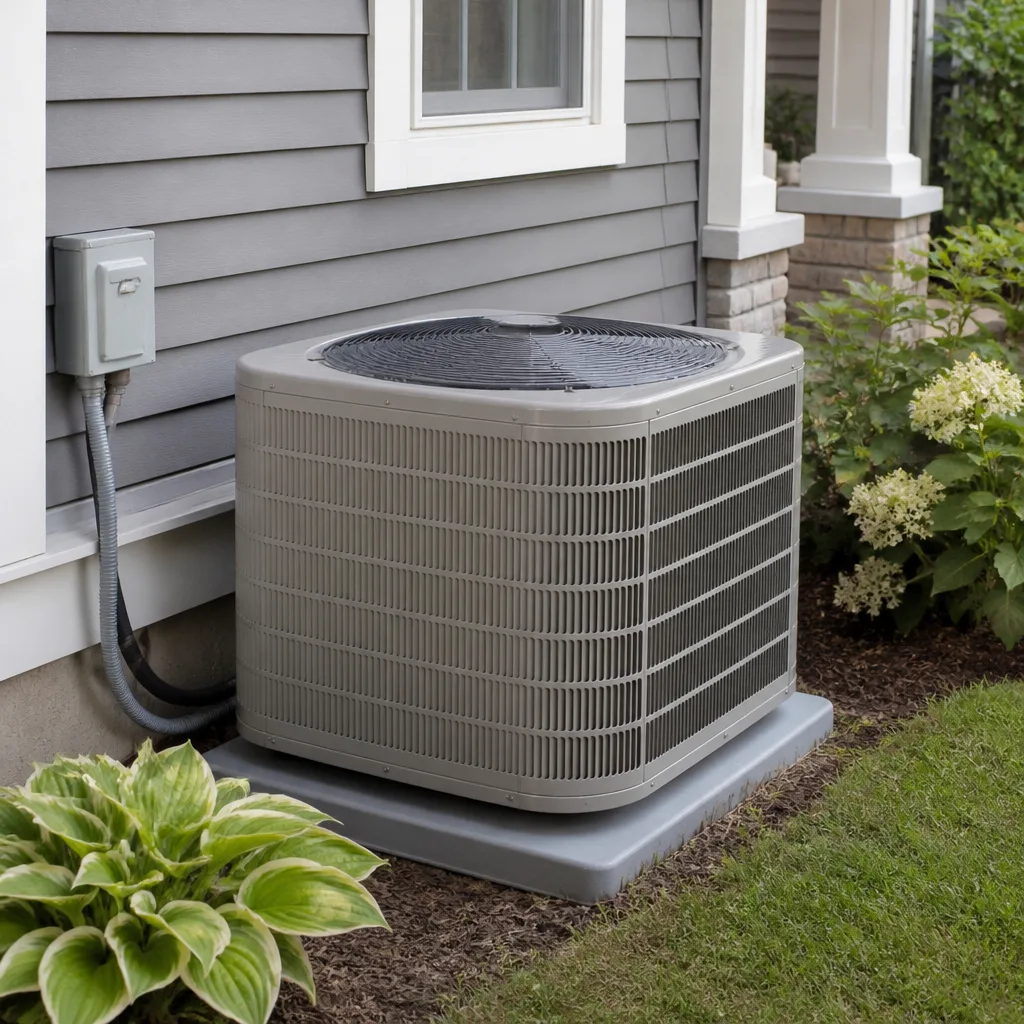 Carrier
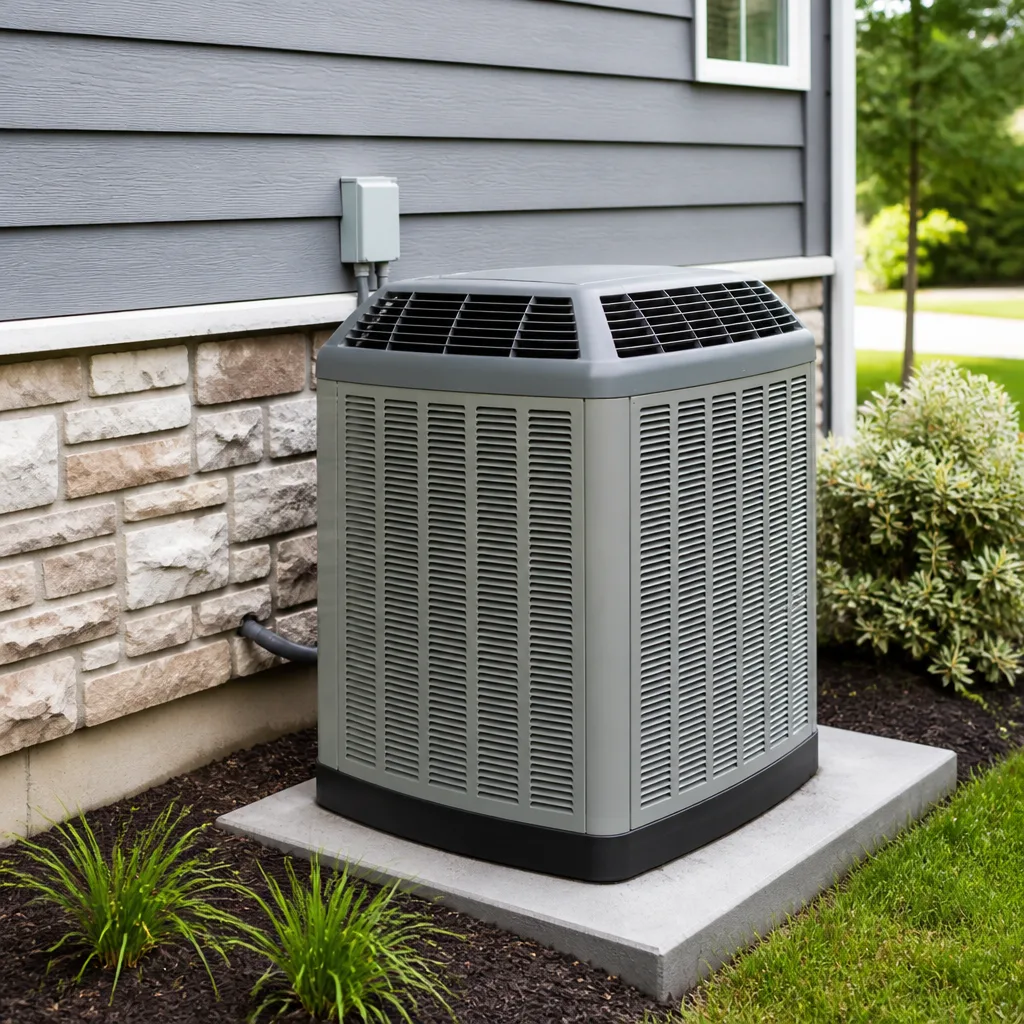 Trane
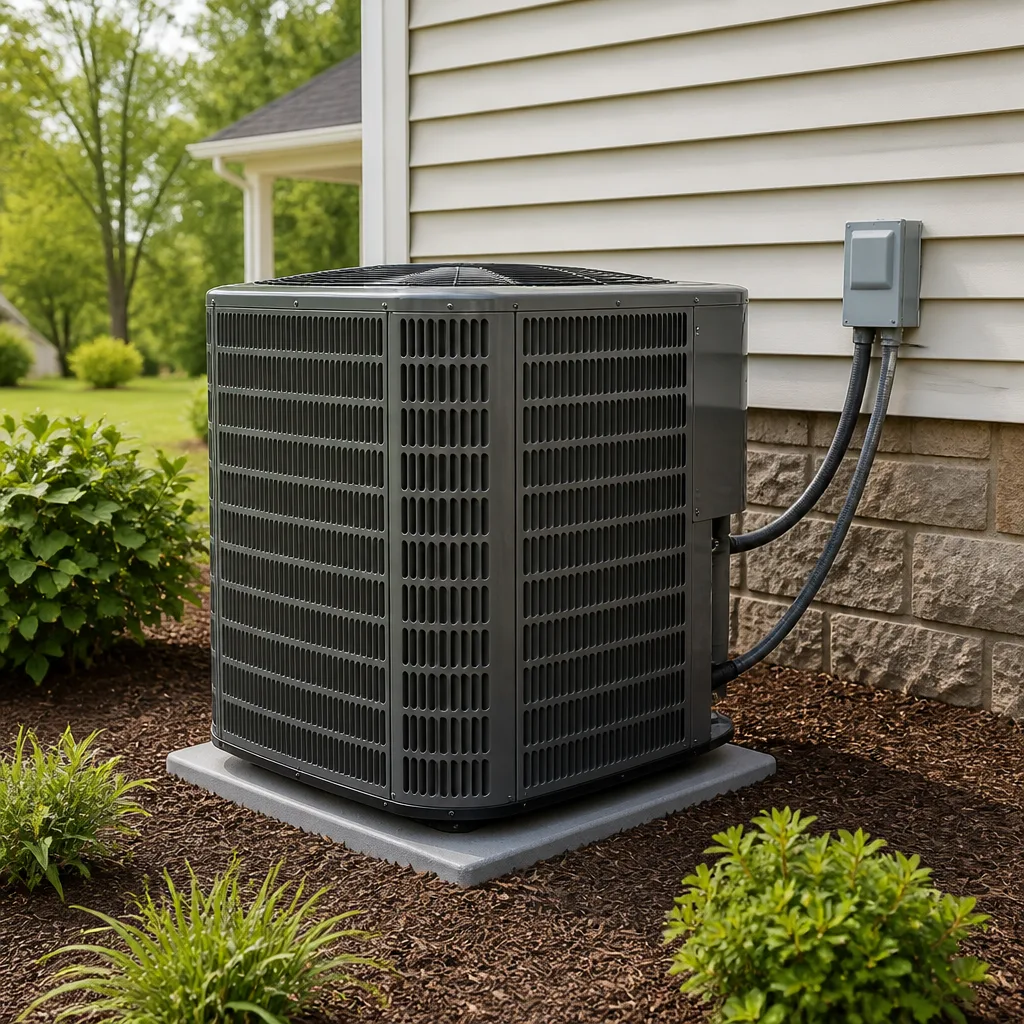 Goodman
Seasonal tune-up and full diagnostic on your Carrier, Trane, or Goodman system - readings shown to you before any repair is proposed
Diagnosis first, numbers second - you approve the repair price before a single part goes in.
Get your free estimateSeasonal HVAC Care for North Las Vegas: Year-Round Homeowner’s Guide
Most seasonal HVAC guides split care evenly across spring, summer, fall, and winter. In North Las Vegas, that’s a mistake. Roughly 70% of system stress happens inside a single 90-day window, and treating the calendar like a balanced four-season year is exactly how homeowners end up with an emergency call in July, when every contractor in the valley is booked out for weeks. This guide is built around the actual climate of North Las Vegas: a brutal summer, a mild winter that still demands heat pump attention, and two narrow transition windows where the maintenance you do or skip determines whether your system survives the next extreme. You’ll learn what to check, when to check it, and what genuinely matters versus what’s just noise.
Quick Answer
Seasonal HVAC care in North Las Vegas means preparing your cooling system before Memorial Day weekend, monitoring performance during peak summer, testing your heat pump reversing valve in early fall, and inspecting your gas furnace heat exchanger even during mild winters. The two best windows for maintenance are late March to late April and mid-September to mid-October, when HVAC companies in North Las Vegas still have real availability and lead times are measured in days, not weeks.
Styles & brands we work with
- AC repair
- Furnace & heating
- Heat pumps
- Ductless mini splits
- Carrier
- Trane
- Goodman
Table of Contents
- The Pre-Summer Checklist: What to Do Before Memorial Day
- During Peak Season: What to Track Yourself Before You Call a Tech
- Fall Transition: Testing Your Heat Pump Before First Heat
- Winter in North Las Vegas: What a Mild Season Actually Requires
- Timing Maintenance: The Two Windows When You’ll Actually Get Attention
- Repair or Replace: How to Think About It Before a Tech Shows Up
- Common Mistakes to Avoid
- When to Call a Professional
The Pre-Summer Checklist: What to Do Before Memorial Day
By the first week of May, the temperature in North Las Vegas starts pressing toward triple digits, and the phone lines at every HVAC company light up at once. If you wait until June to schedule a tune-up, you’re competing with every other homeowner whose system just failed on a 107-degree afternoon. The practical deadline is Memorial Day weekend. After that, lead times stretch to two weeks or more, and diagnostic visits get squeezed between emergency calls.
Here’s the pre-summer checklist we run through with homeowners in North Las Vegas, in the order it matters:
- Replace or clean the air filter. A clogged filter forces the blower motor to work harder, reduces airflow across the coil, and can lead to a frozen evaporator coil at the worst possible moment. In our climate, with dust and fine particulate in the air, we recommend checking the filter monthly during peak cooling season.
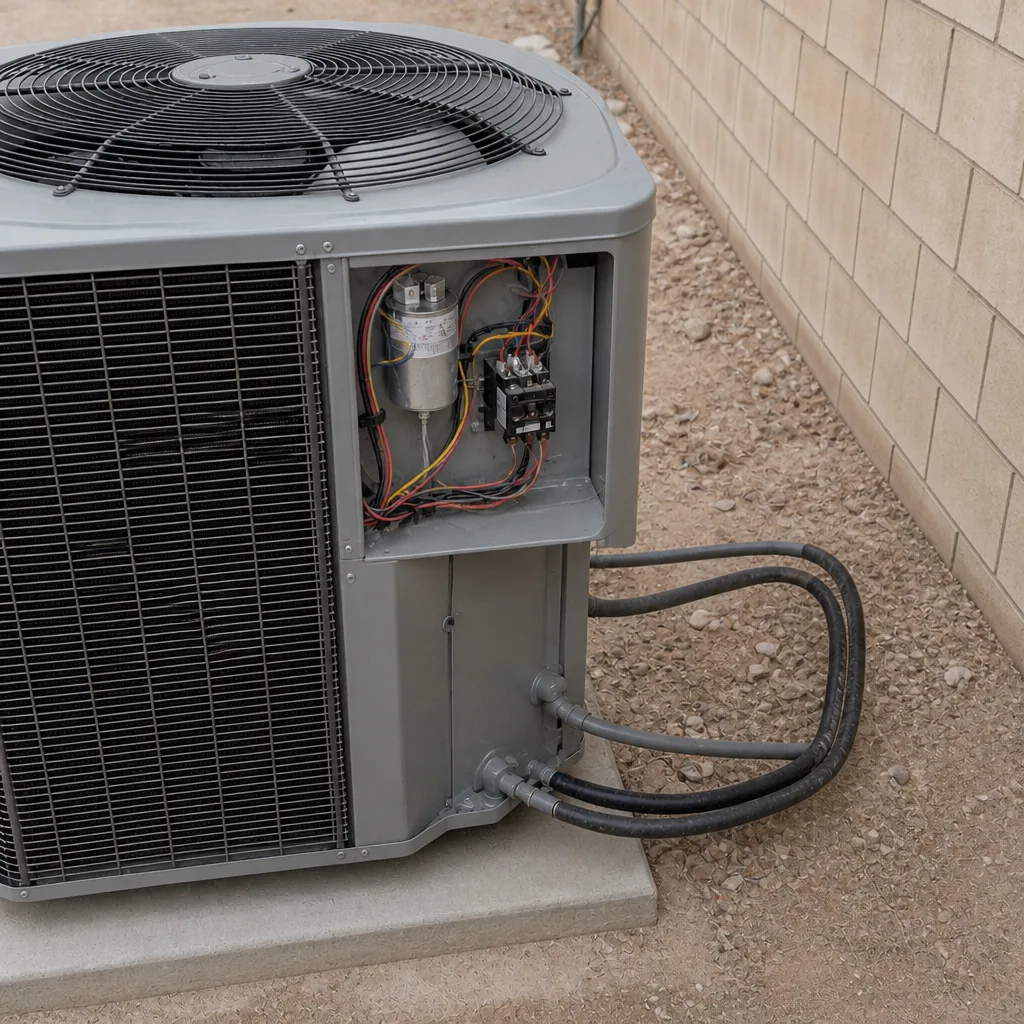
- Inspect the condenser coil for dust and debris. North Las Vegas is a dry, dusty environment. The outdoor condenser coil collects grime and cottonwood in the spring. A dirty coil raises head pressure and cuts cooling capacity. Rinse it with a garden hose, not a pressure washer, if you can reach it safely. Otherwise, leave it to a tech.
- Check the condensate drain line. A clogged drain line can cause water to back up and trip the float switch, leaving you with a dead system on a hot afternoon. If there’s a clean-out tee, a cup of white vinegar once a season helps keep the line clear. Most systems use a safety switch that shuts the unit down, so your clue will be a sudden no-cool call.
- Verify the thermostat is reading correctly. An inaccurate thermostat can cause short cycling or constant running. Compare the displayed temperature to a separate thermometer placed nearby.
- Run the system for 15 minutes and listen. Any rattle, hiss, or buzz that wasn’t there last fall is worth having checked before the real workload starts.
- Have a technician check the refrigerant charge and electrical connections. A system that’s slightly low on refrigerant can run for weeks without failing completely, but it cools less efficiently, runs longer, and stresses the compressor. This is the single most important professional check before a North Las Vegas summer.
Our AC repair work in North Las Vegas consistently shows the same pattern: systems that received a pre-summer inspection in April or early May fail far less often in July and August than systems that went straight from winter idle into full cooling load. The physics isn’t complicated. A compressor that’s been sitting for months needs a clean start, not a cold jump into 15-hour days.
During Peak Season: What to Track Yourself Before You Call a Tech
In June, July, and August, your air conditioner becomes the hardest-working appliance in your home. The good news is that two simple measurements will tell you more about its health than any guesswork. You don’t need a gauge set or a multimeter to catch most developing problems before they become full failures.
First, track the supply air temperature delta. That’s the difference between the air entering your return grille and the air leaving the supply register closest to the air handler. With the system running for at least 10 minutes, measure both temperatures with an inexpensive infrared thermometer or even a digital kitchen thermometer. In a properly charged system, you should see a delta of 15 to 20 degrees. If it’s 12 degrees or less, the system is struggling, and in North Las Vegas heat, struggling systems fail within weeks. A high delta, over 22 degrees, usually points to low airflow from a dirty filter or failing blower.
Second, count the runtime cycles per hour. In the peak of a North Las Vegas afternoon, a properly sized system will run continuously or close to it, which is normal. But if you’re walking past the thermostat at 10 a.m. on an 85-degree morning and the system is kicking on and off every 10 minutes, that’s an oversized system or a control problem. Short cycles wear out compressors and evaporate efficiency. If the system runs constantly but the house never reaches the setpoint, the system is either low on refrigerant or undersized for the load.
These are the two numbers to have in hand when you call a tech. They turn “it’s not working right” into “my delta is 11 degrees and it’s short cycling three times an hour.” That’s information a technician can act on immediately, which reduces diagnostic time and keeps the service visit honest. If you’re not comfortable taking readings, make note of how the air feels and how often the unit runs, and we can diagnose from there.
Fall Transition: Testing Your Heat Pump Before First Heat
The first cool evening in North Las Vegas is usually late October or early November. That’s when thousands of heat pumps across the valley shift from cooling mode to heating mode for the first time in months, and that’s exactly when reversing valves fail. The reversing valve is a small component that redirects the refrigerant flow so the system can move heat in the opposite direction. It sits unused through the entire summer, then it’s asked to move in September or October after sitting idle. If it sticks, you get cold air in heating mode or the system locks out entirely.
Here’s the smart move: test your heat pump before you need it. Pick a mild afternoon in mid-September, when it’s still warm enough that the system has been running in cooling all day. Switch the thermostat to heat, set the temperature five degrees above the room temperature, and let it run for five minutes. What you should get is warm air from the registers, not cold. If the air feels cool or the outdoor unit makes a loud chattering sound from the compressor area, the reversing valve may be sticking.
The reason this matters in North Las Vegas specifically is that our first cold snap isn’t cold enough to freeze pipes or threaten health, but it’s cold enough to be uncomfortable in a 50-degree morning with no heat. And by November, heating repair calls are competing with the last of the cooling season, so lead times stretch. Getting a head start in September means a simple reversing valve job stays simple, instead of becoming a multi-week wait for a part.
Heat pump reversing valve failures are one of the most common first-heat calls we handle. The fix is usually a new reversing valve and a refrigerant charge, which is a same-day repair if diagnosed early. Testing in September costs you nothing. Finding out in December costs time and pain.
Winter in North Las Vegas: What a Mild Season Actually Requires
North Las Vegas winters are famously forgiving. Daytime highs in the 50s and 60s, overnight lows in the 30s, and only a handful of genuinely cold nights. A heat pump handles that load with ease, and many gas furnaces in the valley run fewer than 100 hours per season. That’s exactly why homeowners assume their furnace needs nothing. It’s a false assumption.
The issue is the heat exchanger. In a gas furnace, the heat exchanger is the steel tube or chamber that carries hot combustion gases while the blower pushes cooler air across its surface to warm the house. Over time, expansion and contraction from heating cycles causes microscopic cracks, especially at weld points and bends. In a climate where the furnace barely runs, corrosion isn’t the dominant factor, but age is. A 15-year-old furnace in North Las Vegas may have only a few thousand hours of runtime, but the heat exchanger is still 15 years old, and the gaskets, ignitor, and flame sensor have all aged the same. A cracked heat exchanger leaks carbon monoxide into the living space, which is a low but real risk.
We recommend an annual furnace inspection in the fall, even in North Las Vegas where winters are short. The inspection includes testing for CO at the supply register, visually checking the heat exchanger for cracks or discoloration, cleaning the flame sensor, and checking the ignitor and gas valve operation. It’s a straightforward job and catches failures before the system is asked to perform on a genuinely cold night.
For heat pumps, winter in North Las Vegas is mostly a maintenance interval. Check the outdoor unit after any high wind event for debris against the coil, keep the area clear of leaves, and verify the system isn’t icing over in a way that doesn’t clear during defrost cycles. Heat pumps do ice up in cold, damp conditions, and the defrost control should clear it. If ice builds up and stays, the defrost control or the reversing valve has failed.
Timing Maintenance: The Two Windows When You’ll Actually Get Attention
There is a fundamental mismatch in the HVAC industry: every homeowner wants maintenance at the same moment, and no company can absorb that kind of demand spike. In North Las Vegas, the spike starts in late May and extends into August, with a second, smaller spike in December. If you call during those windows, you’ll get service, but you’ll get it later than you’d like, and you’ll pay rush pricing attention from a team that’s pushing against a full board.
The two windows when HVAC companies have genuine availability in North Las Vegas are late March through late April and mid-September through mid-October. During these windows, call volume is lower, techs aren’t running from emergency to emergency, and diagnostic work gets more time. You can book a maintenance appointment within a day or two, and you’ll be done before the weather turns.
For cooling, aim for late March through late April. That’s still a month or more before the peak demand, and your system will be tested and corrected before temperatures hit 100. For heating, aim for mid-September through mid-October, before the first cold snap and before the reversing valve has a chance to fail under load. In both cases, the maintenance itself is the same: filter, coil inspection, refrigerant check, electrical connection torque, drain line check. The difference is that you’re doing it on schedule, not in a panic.
We’ve seen the contrast year after year in North Las Vegas. A homeowner who schedules a tune-up in April gets a 45-minute appointment and a detailed report. A homeowner who waits until July 10 is calling after the system has already failed, and the answer is “we’ll get there Tuesday” because the queue is 50 calls deep. Time your maintenance, and you control the timing. Miss the window, and the weather controls you.
Repair or Replace: How to Think About It Before a Tech Shows Up
When a system fails in North Las Vegas, the knee-jerk reaction is often to replace it. That’s understandable: it’s hot, you’re uncomfortable, and a new unit sounds like a clean solution. But a repair-first approach almost always makes more economic sense, especially if the system is under 10 years old or the failure is a single component. Here’s the framework we use:
- Under 8 years old: Repair unless the compressor has physically failed and the unit is out of warranty. At 8 years, the system likely has refrigerant capacity left and the major components still have life.
- 8 to 14 years old: Evaluate. If the repair is under $1,200 and the system has been maintained, repair makes sense. If the compressor has failed, the evaporator coil is leaking, and the condensing unit is original, replacement starts to win.
- Over 14 years old: Lean toward replacement. At 14 years, even a well-maintained system in North Las Vegas has been through 14 summers of continuous 100-degree-plus load. Efficiency has degraded, R-22 refrigerant is being phased down, and parts availability gets spotty.
The honest answer is that we diagnose the specific failure before we ever mention replacement. We service equipment from Carrier, Trane, Lennox, Goodman, and several other major brands, which means we can tell you whether a specific compressor or coil failure on your unit is repairable, instead of defaulting to “it’s old, replace it.” We follow the problem, not a preferred manufacturer. If a Goodman heat pump from 2016 has a failed capacitor, that’s a $250 fix, not a $9,000 replacement. We’ll say so. When replacement is the right call, we’ll AC installation quote it out and we won’t pad it with services you don’t need.
Common Mistakes to Avoid
- Skipping pre-summer maintenance because “it worked last year.” Every system works until it doesn’t. The pre-summer inspection is where you catch the slow refrigerant leak or the failing capacitor before it becomes a July 4th emergency call.
- Closing too many supply registers. Homeowners in North Las Vegas sometimes close registers in unused rooms, thinking they’re saving energy. Actually, closing more than a couple of registers raises static pressure, reduces airflow across the coil, and can cause the evaporator to freeze. Keep at least 80% of registers open.
- Leaving the thermostat on “hold” at one temperature all summer. A constant 68-degree setting on a North Las Vegas July day forces the system to run nonstop during the hottest hours, then still runs at night. A modest setback, even five degrees, during the day when no one is home saves real money and reduces wear.
- Replacing a filter with a higher MERV rating than the system can handle. High-MERV filters restrict airflow more than standard filters. If your blower wasn’t designed for MERV 13 or higher, you’ll get reduced airflow and the same frozen-coil symptoms as a dirty filter. Standard MERV 8 to 11 is right for most residential systems.
- Ignoring a faint musty smell from the vents. In a humid indoor environment, a musty smell points to microbial growth on the evaporator coil or in the drain pan. In North Las Vegas, with its dry outside air, the coil can still get damp from condensation and become a breeding ground. Get it checked before it becomes a health issue.
- Assuming the furnace is fine because winter is mild. This one deserves repeating. A gas furnace in North Las Vegas may run only a few dozen hours per year, but the heat exchanger still ages, and corrosion still happens at the burners. Annual inspection is only way to catch a CO leak before it becomes a real danger.
When to Call a Professional
Some HVAC work is genuinely dangerous to attempt yourself. High-voltage electrical connections, refrigerant handling, gas line connections, and heat exchanger inspection all require training and specialized tools. A homeowner should never open an electrical disconnect, add refrigerant, or work on a gas burner assembly. The risks of electrical shock, refrigerant burns, or gas leaks far outweigh any savings. If your system is tripping a breaker, making a loud buzzing sound, or you smell something like rotten eggs from a furnace, shut the unit down at the thermostat and call a licensed technician.
If you’ve worked through the basics – filter, thermostat settings, drain line – and your system is still not cooling or heating properly, it’s time to call. Stratford AC Repair offers free estimates in North Las Vegas. Call (844) 731-3077 and we’ll get a technician on it.
See the difference
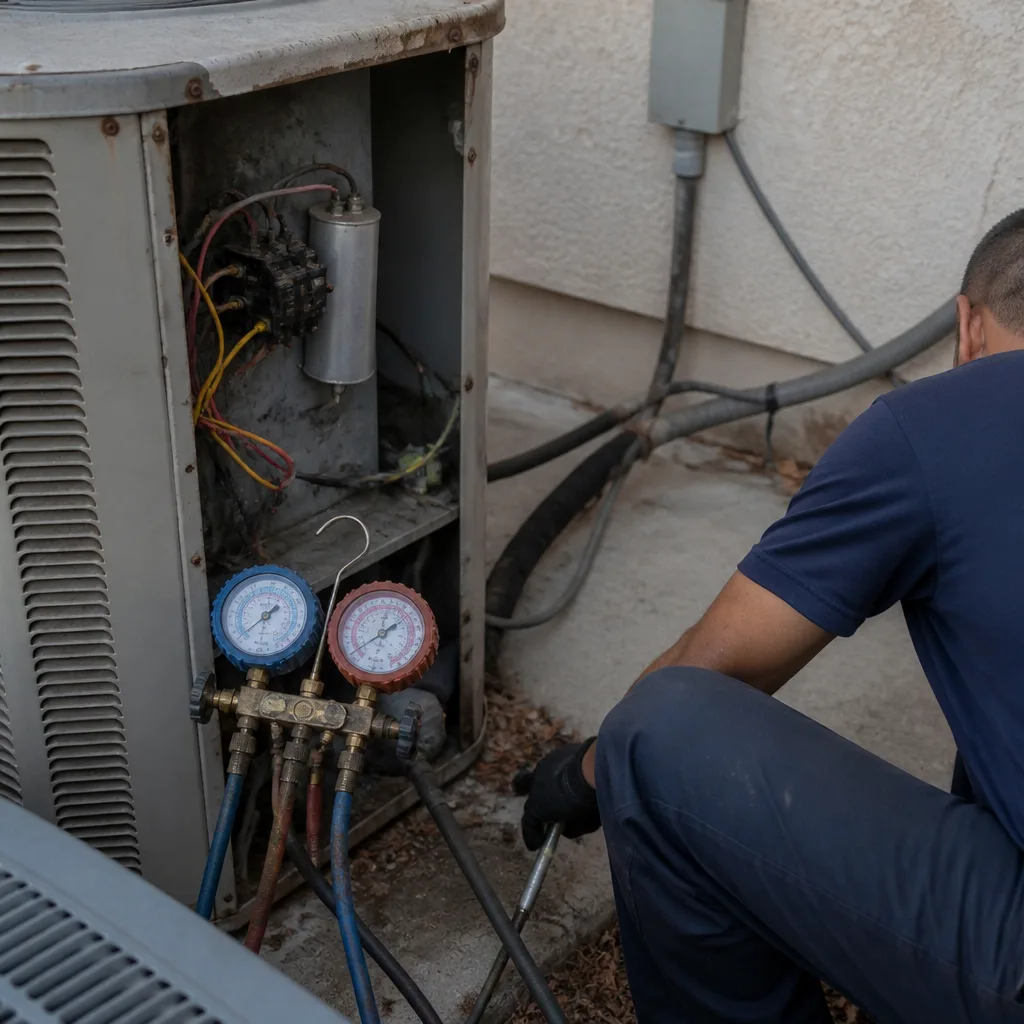 Before
 After
 Before
 After
 Before
 After
Frequently Asked Questions
Once per year for cooling, before Memorial Day, and once per year for heating, in the fall before the first cold snap. In North Las Vegas, the cooling season is the critical one. A single pre-summer tune-up covers filter, condenser coil, refrigerant charge, and electrical connections.
Set it to 78 degrees when you’re home and awake, and let it drift up 5 to 8 degrees when the house is empty during the day. The system will run less, use less energy, and still recover quickly when you return. Setting it to 68 on a 110-degree North Las Vegas afternoon only forces the system to run continuously and still struggle.
You can do the filter, the drain line flush, the thermostat check, and a visual inspection of the outdoor unit. Refrigerant checks, coil cleaning, electrical connection tightening, and heat exchanger inspection are all professional work. A homeowner should never open an electrical panel or work on gas components.
Heat pumps have a short delay when switching from cooling to heating mode, but if the air stays cold for more than a few minutes, the reversing valve may be stuck. This is a common first-heat failure, and it’s a straightforward repair if caught early. Test your heat pump in September, before you need it.
Typical maintenance visits in North Las Vegas run from $100 to $200 depending on the system and what’s included. Repair calls are quoted at a diagnostic fee, which is waived when you hire us for the repair. We provide written estimates before any work starts, so there are no surprises. Call (844) 731-3077 for an exact quote.
If the system is under 8 years old, repair almost always makes sense. Between 8 and 14 years, it depends on the repair cost and system condition. Over 14 years old with a major component failure, replacement starts to win. We assess repair viability honestly before discussing replacement, and we service nearly every major brand including Carrier, Trane, Lennox, and Goodman.
The Bottom Line
Seasonal HVAC care in North Las Vegas is not a balanced four-season routine, and treating it like one is the quickest path to a July emergency. The real work happens in the spring, before the heat arrives, and in the early fall, before the first cold morning. The rest is monitoring: know your delta, know your runtime, and know when those numbers drift. Time your maintenance during the narrow spring and fall windows when contractors have availability, and you’ll get better service at a calmer pace. Skip it, and you’ll be one more call in the July queue. North Las Vegas homeowners who maintain their systems on schedule spend less, replace less often, and stay comfortable through the worst of it. We can help with that plan.
Written by the team at Stratford AC Repair, serving North Las Vegas since 2015.