
Last updated November 14, 2026
 AC repair
 Furnace & heating
 Heat pumps
 Ductless mini splits
 Carrier
 Trane
 Goodman
Seasonal tune-up and full diagnostic on your Carrier, Trane, or Goodman system - readings shown to you before any repair is proposed
Diagnosis first, numbers second - you approve the repair price before a single part goes in.
Get your free estimateHVAC Permits, Codes & Inspections in North Las Vegas, NV: What You Need to Know
Most homeowners assume that if a new air conditioner blows cold air, the job was done right. That assumption falls apart the day an appraiser or home inspector flags an unpermitted installation. In North Las Vegas, the difference between a clean sale and a delayed closing often comes down to a single piece of paper nobody thought to pull. This guide walks through who has jurisdiction over your address, what the adopted code cycle actually requires, what an inspector looks at, and how to avoid the expensive fix of retroactive permitting. We’ll cover the process plainly, so you know what to ask before anyone touches your system.
Quick Answer
Most HVAC work in North Las Vegas, including new AC installation and furnace replacement, requires a permit from either the City of North Las Vegas Building & Safety Division or Clark County Building Department, depending on your exact address and whether you live inside city limits. Work must follow Nevada’s adopted ICC codes, specifically the International Mechanical Code and International Residential Code, and pass a final inspection. Pulling the right permit up front protects your warranty, your safety, and your ability to sell the home later.
Styles & brands we work with
- AC repair
- Furnace & heating
- Heat pumps
- Ductless mini splits
- Carrier
- Trane
- Goodman
Table of Contents
- Who Has Jurisdiction Over Your North Las Vegas Address
- Which Code Cycle Nevada Uses and the Specific Sections That Matter
- When an HVAC Permit Is Actually Required in North Las Vegas
- Homeowner Permit vs. Contractor Permit: What’s Legal
- What an HVAC Inspection in Clark County Actually Covers
- What a Failed Inspection Costs You in Time and Money
- How Unpermitted HVAC Work Gets Discovered During a Sale
- Remediation: Fixing an Unpermitted Installation
Who Has Jurisdiction Over Your North Las Vegas Address
This is the detail most contractors skip and most homeowners never think to check. North Las Vegas is its own incorporated city with its own Building & Safety Division. That office handles permits and inspections for properties inside city limits. But drive a few blocks in the wrong direction and you’re in unincorporated Clark County, where the Clark County Building Department takes over. A mailing address that says “North Las Vegas” does not automatically mean the City of North Las Vegas has jurisdiction. The USPS assignment and the municipal boundary are not the same thing.
Before anyone pulls a permit, you need to know which of these two authorities applies. The wrong permit gets rejected, the job gets delayed, and the contractor may pass the administrative cost on to you. Here’s how to determine jurisdiction fast:
- Check your property address against the Clark County Assessor’s parcel map. The parcel record shows the municipal jurisdiction field explicitly. If it says “North Las Vegas” you go through the city. If it says “Unincorporated Clark County” you use the county.
- Call the City of North Las Vegas Building & Safety Division directly. Give them your street address and ask if the property falls inside city limits. They can answer in under five minutes.
- Look at your last property tax bill. The taxing district line typically names the jurisdiction. This is a reliable secondary check.
- Ask your HVAC contractor which office they are pulling from. If they hesitate or say “it doesn’t matter,” that’s a red flag. It absolutely matters in this region.
In our experience serving North Las Vegas and the surrounding valley, the biggest permit delays come from a contractor filing with the wrong agency and not discovering the error until inspection scheduling. The homeowner then waits an extra week or two while the file gets transferred or restarted. Confirm jurisdiction up front and you remove the entire problem class.
Which Code Cycle Nevada Uses and the Specific Sections That Matter
Nevada adopts model codes at the state level, and local jurisdictions enforce them. The two that govern almost all residential HVAC work are the International Mechanical Code, or IMC, and the International Residential Code, or IRC. The IMC covers the mechanical equipment and ductwork. The IRC covers the building integration, including how the equipment sits on your property and how it’s wired. Clark County and the City of North Las Vegas both enforce these state-adopted codes, with local amendments available through each building department.
Three code sections come up constantly on residential HVAC work in this desert climate:
- Refrigerant line set protection. The IMC requires refrigerant piping to be protected from physical damage. In North Las Vegas, that most often means shielding lines that run along an exterior wall from the sun, landscape tools, and the occasional curious dog. Lines run through an attic chase or under a patio slab need mechanical protection in specific places. An inspector will look for this.
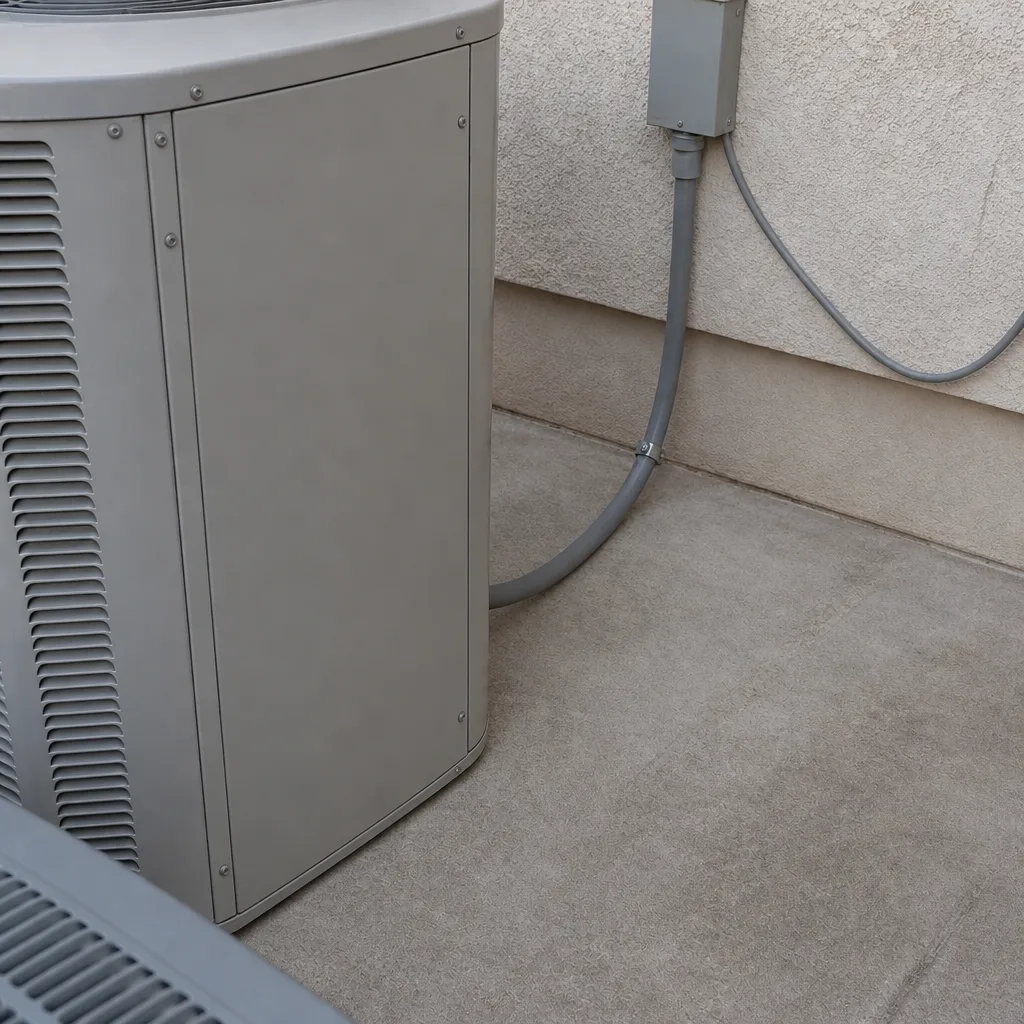
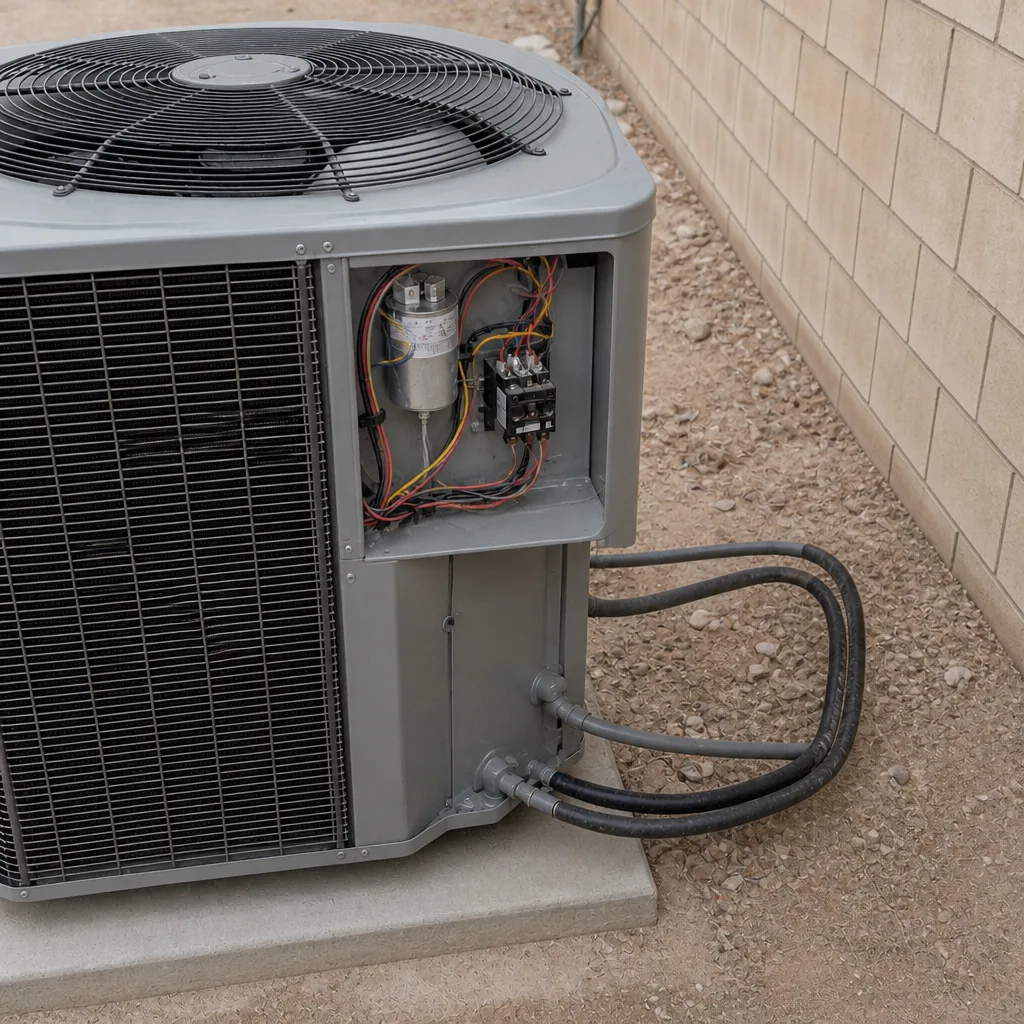
- Electrical disconnects. The IRC requires an accessible electrical disconnect within sight of the condensing unit. It must be within a specific distance so a technician or firefighter can cut power fast. A disconnect hidden behind a privacy fence or buried behind overgrown oleander will fail. The disconnect also has to match the unit’s nameplate rating.
- Equipment setback distances. The IRC sets required clearance around an outdoor condensing unit. The equipment needs space to draw air across the coil and a technician needs room to work. In North Las Vegas, where lots are smaller and side yards are tight, this requirement forces more thought than the contractor sometimes expects. A unit squeezed too close to a block wall or a neighbor’s fence line is a code violation and will be failed.
Desert heat is the local variable that makes air movement from condensers matter more than in cooler climates. An inspector is not just checking a box. They’re checking that the equipment can breathe when it’s 110 degrees outside and the system is running flat out.
When an HVAC Permit Is Actually Required in North Las Vegas
The short rule: replacing the mechanical equipment or altering the system requires a permit. Changing a filter does not. A surprising number of homeowners conflate the two ends of that spectrum. Here’s the practical breakdown for this market.
These jobs require a permit in North Las Vegas and Clark County:
- New AC installation, whether it’s a first-time system or a complete replacement of the condenser and evaporator coil. This is a mechanical change to the home’s permanent systems.
- Furnace replacement. Swapping a gas furnace involves combustion venting, gas line connections, and electrical work. All three sit inside the permit review.
- Ductwork replacement or significant alteration. Running new supply or return lines in an attic or crawl changes the system’s air distribution. The inspector verifies the sizing and material are correct.
- Adding a new service disconnect or altering the electrical supply to the HVAC equipment. This is electrical work and sits inside the mechanical permit scope in most residential cases.
- Heat pump or mini-split installation. New equipment in a new location almost always needs the permit, even if it’s a smaller system.
These jobs usually do not require a permit:
- Replacing an air filter or a belt.
- Cleaning the coils or clearing a clogged condensate line.
- Replacing a capacitor, contactor, thermostat, or control board, so long as the work does not alter the branch circuit wiring.
- Topping off refrigerant after a leak repair, though the leak repair itself may trigger a different set of questions about the system’s integrity.
When in doubt, call the building department. The person answering that phone can tell you in plain terms whether your specific project needs a file opened. That five-minute call is the cheapest insurance against a four-figure correction later.
Homeowner Permit vs. Contractor Permit: What’s Legal
Nevada law allows a homeowner to pull their own permit for work on a property they own and occupy. That’s the legal part. The practical part is more complicated. An owner-builder permit means you are acting as the general contractor for that work. You assume liability for code compliance, you schedule the inspection, and you are listed on the permit as the responsible party. If something fails, the building department looks to you, not the person who actually installed the equipment.
For most homeowners, pulling their own HVAC permit is the wrong decision. A residential HVAC installation requires connecting refrigerant lines under pressure, verifying subcooling and superheat, running dedicated electrical circuits, and commissioning the equipment so it doesn’t destroy itself in the first season. None of that is weekend-warrior work. The danger from getting any part of it wrong ranges from a system that shorts out to a compressor that burns up to a gas furnace venting carbon monoxide into the home. This is not a light fixture.
The legal distinction that matters most: a homeowner permit does not transfer contractor accountability onto the person doing the work. If you pull the permit and a friend’s brother installs the unit, and that unit later fails because of a bad install, the manufacturer may deny the warranty because the installing party was not a licensed contractor. The building department may require you to remove and replace the installation. The savings from skipping a contractor’s permit fee evaporate the first time a warranty claim gets denied.
When a licensed contractor pulls the permit, they carry the insurance, the bond, and the accountability for the work they did. That’s what you’re actually paying for when you hire a licensed shop. At Stratford AC Repair, we handle the permit paperwork as part of our AC installation work. We pull from the correct authority for your address, schedule the inspection, and stand by the work until the final approval is in hand.
What an HVAC Inspection in Clark County Actually Covers
A residential HVAC inspection is not a performance review of the equipment’s cooling ability. It’s a code compliance check. The inspector verifies that the installation matches the approved permit documents and meets the minimum standards adopted in the IMC and IRC. They are not there to evaluate whether you bought the right tonnage for your square footage, though an egregious mismatch may catch their eye.
Here’s what a typical final inspection for a new AC install covers in this valley:
- Equipment location and clearances. The inspector measures the setback from walls, fences, and windows. They check that the unit sits on a stable pad and is elevated as required for the local flood plain or drainage pattern.
- Electrical disconnect and wiring. They verify the disconnect is within sight, the whip is properly secured, and the wire gauge matches the nameplate’s minimum circuit ampacity and maximum overcurrent protection.
- Refrigerant piping. They look at the line set insulation, support spacing, and physical protection. In our desert heat, uninsulated suction lines sweat and lose efficiency, and the inspector may flag that.
- Condensate drainage. The drain line must terminate where it won’t create a trip hazard or foundation issue. A drain that just dribbles onto a walkway is a fail.
- Furnace venting and gas connections. If the job includes a furnace, the inspector checks the flue pipe slope and clearance, the sediment trap on the gas line, and the combustion air supply to the space.
- Ductwork connections. The inspector looks at the supply and return plenums and may require a visual on any new duct runs. Taped seams that are already peeling at inspection day are a common fail.
The inspection itself usually takes under an hour for a straightforward residential swap. The value is in the problems it catches before they become hidden liabilities inside your walls and attic.
What a Failed Inspection Costs You in Time and Money
A failed inspection is not a disaster, but it is a delay that compounds. The first inspection is included with the permit fee in most residential cases. A reinspection carries an additional fee, and that fee varies by jurisdiction. The bigger cost is the calendar. In a North Las Vegas summer, every day a failed inspection sits unresolved is a day your new system isn’t running and your family is in the heat.
The most common failure points we see on jobs that other contractors installed:
- Wrong wire gauge or breaker size. The inspector can check this against the nameplate in thirty seconds. A contractor who didn’t read the label fails the inspection in thirty more.
- Disconnect installed out of sight or behind a gate. This is a straight code citation and requires relocation, sometimes involving a new conduit run.
- Condensate line draining into a location that violates property line setbacks. Moving the termination point can mean rerouting the line through a wall or into a different landscape zone.
- Missing sediment trap on the gas line at the furnace. A five-dollar fitting that takes a plumber fifteen minutes to add, but it fails the inspection just the same.
- Duct connections not sealed to code. The inspector may require mastic sealing on accessible joints before they sign off.
Each correction means scheduling another visit. In peak season, the reinspection window can push out a week or more depending on inspector availability. A install that “passed” the contractor’s own walkthrough but failed the real inspection has added a hidden week to your project timeline. The fix is simple: hire a contractor who has done enough of these to know exactly what the inspector will look at before the inspector shows up. Our technicians do this work every day, across the nine major brands we service: Carrier, Trane, and Lennox among them. We know the local inspection patterns.
How Unpermitted HVAC Work Gets Discovered During a Sale
The most common discovery point is the buyer’s home inspection. A licensed home inspector in Nevada will note whether the HVAC equipment appears newer than the home’s permit history. They can check the building department’s online permit search in minutes. If the condenser outside is three years old and there’s no mechanical permit on record during that period, the inspector flags it. That flag goes into the report. The buyer’s agent then asks the seller to produce the permit or resolve the issue before closing.
The second discovery point is the appraisal. An appraiser completing a standard FHA or VA appraisal will look at the property record and may note the equipment condition. If the system looks new but the permits don’t match, the appraisal can be conditioned on remediation.
The third point is the seller’s own disclosure form. Nevada requires sellers to disclose material facts about the property, including work done without permits. “I didn’t know” is rarely a defense that holds up when the system was installed during the seller’s ownership and the lack of a permit is verifiable.
Once discovered, the typical sequence looks like this:
- The buyer requests a retroactive permit. The seller must contact the building department, explain the situation, and open a permit file after the fact.
- The building department sends an inspector. The inspector reviews the existing installation against current code. If the work predates a code change, they may still require certain safety items to be updated.
- The seller pays any penalties or reinspection fees. Some jurisdictions charge a double-fee penalty for work done without a permit. Clark County and North Las Vegas both have processes for this, and the cost is never zero.
- If the installation fails, the seller pays to fix it. At that point, the seller is negotiating against a clock. The closing is waiting. They typically pay whatever the correction costs, because the alternative is losing the buyer.
This entire scenario disappears when the original contractor pulls the permit on day one. It’s the cheapest line item in the whole job, and it’s the one that protects you from the most expensive repair.
Remediation: Fixing an Unpermitted Installation
If you’re holding a home with an unpermitted HVAC system, the path back to compliance is more straightforward than most people fear. The building department’s goal is to get the property into a safe, documented state, not to punish a homeowner who inherited a problem from a previous owner. But the process does require honesty and some patience.
The steps typically run in this order:
- Contact the correct building department based on your jurisdiction as described earlier. Tell them plainly that you have an existing HVAC installation without a permit and you want to bring it into compliance.
- Open a retroactive permit file. You’ll pay the base permit fee plus any late or penalty fees that apply. The department will explain the exact amount before you commit.
- Schedule an inspection of the existing installation. An inspector comes out and evaluates what’s there against the code that applied when the work was done, plus any mandatory upgrade items the jurisdiction enforces retroactively.
- Complete the listed corrections. This may mean moving a disconnect, re-supporting a line set, fixing the condensate drain, or replacing a wrong-sized breaker.
- Pass the final reinspection and close the permit. Once the file is closed, your property record is clean. If you’re doing this before a sale, you can now present the buyer with a closed permit and a clear disclosure.
In the North Las Vegas market, remediation work is most common on homes that were flipped quickly, where the investor used an unlicensed laborer to swap the equipment and skipped the permit to save three days. The buyer later discovers the issue and has two choices: walk away or pay to fix it. The seller often ends up paying for the remediation anyway through a closing credit. If you’re the buyer looking at a home with this issue, ask the seller to handle remediation before closing. If you’re the seller, handle it before listing. Either way, the cost is lower when you address it voluntarily than when it’s forced in escrow.
Common Mistakes to Avoid
- Assuming the contractor’s word is enough. A contractor who says “we don’t need a permit for this” should be asked to put that in writing. If they won’t, find a different contractor. The permit requirement is not optional for major mechanical work in North Las Vegas.
- Filing with the wrong jurisdiction. As we covered, a North Las Vegas mailing address can belong to unincorporated Clark County. Verify the parcel record before anything gets filed. A rejected permit resets the timeline.
- Pulling a homeowner permit for a full system install. You can do it legally. You probably shouldn’t. The liability exposure and the warranty risk are not worth the few hundred dollars you save over a licensed contractor’s permit handling.
- Skipping the final inspection after the equipment runs. Some homeowners assume the job is done once cold air comes out of the registers. A closed permit requires the final inspection. An open permit file looks like a red flag to a buyer and can stall a sale.
- Not checking that the disconnect is accessible. It’s one of the most inspected items and one of the most commonly failed. If you can’t see the disconnect from the unit, the inspector will probably write it up.
- Letting a handyman touch the gas line at the furnace. Gas connection work inside a home in Nevada requires a licensed contractor with appropriate endorsements. A handyman who advertises “furnace installation” is not licensed for the gas work. The inspector will check.
- Assuming the warranty covers an unpermitted install. Most manufacturers include language allowing them to deny claims when the equipment was installed without required local permits. A denied compressor claim can cost you the entire system.
See the difference
 Before
 After
 Before
 After
 Before
 After
When to Call a Professional
If you are replacing a furnace, installing a new AC system, or altering ductwork, pull a permit and hire a licensed contractor who handles the paperwork. If you’ve discovered your current system may not have been permitted and you’re planning to sell, call a contractor to inspect the installation before the buyer’s inspector does. If your AC failed and you need AC repair, most repair work does not require a permit, and a licensed technician can tell you whether the deeper problem crosses the threshold into replacement territory. Stratford AC Repair offers free estimates in North Las Vegas. Call (844) 731-3077 to get a straight answer about your system’s condition and whether your project needs a permit.
Frequently Asked Questions
Yes, a full AC replacement requires a mechanical permit from either the City of North Las Vegas Building & Safety Division or Clark County Building Department, depending on your property’s jurisdiction. The permit must be pulled before the equipment is installed, and a final inspection is required to close the file. Skipping the permit can void your manufacturer warranty and complicate a future sale. Call (844) 731-3077 if you want help determining which authority applies to your address.
Nevada law allows you to pull an owner-builder permit on a property you own and occupy, but doing so makes you personally responsible for code compliance and inspection scheduling. You also lose the contractor accountability that protects your warranty. For any work involving refrigerant, electrical circuits, or gas connections, a licensed contractor is the safer and usually cheaper choice over the life of the equipment.
Permit fees are based on the project’s valuation and vary between the City of North Las Vegas and Clark County. You will get the exact number from the building department when you or your contractor opens the file. The permit fee is almost always the least expensive line item in the project, especially compared to the cost of retroactive permitting later.
The inspector writes up the specific code violations, and you or your contractor corrects them. The reinspection carries an additional fee in most cases. The time cost usually exceeds the money cost, since reinspection scheduling can take time, especially during the summer season when HVAC work is at its busiest.
Search the permit records online through the building department that has jurisdiction over your address. Both the City of North Las Vegas and Clark County maintain searchable permit databases. Enter your street address and look for mechanical permits during the period when the equipment appears to have been installed. If you don’t find one, you may have an unpermitted system.
It can, but usually only after the issue is resolved. The buyer’s inspector will likely flag the discrepancy, and the buyer will ask you to either produce the permit or remediate the installation before closing. The seller typically pays for this remediation, and the process can stretch out the escrow. Handling the permit correctly at install time is the simplest way to avoid this problem entirely.
The Bottom Line
The permit process in North Las Vegas is not complicated once you know which building department has jurisdiction over your specific address. The complications come from skipping the permit and discovering the omission years later during a sale, a warranty claim, or a repair where a technician has to open a wall or a circuit. Pull the right permit, use a licensed contractor who files it correctly, and get the final inspection closed out. That’s the whole play. The system works, the file is clean, and the only thing you have to think about during the next desert summer is the thermostat setting.
Written by the team at Stratford AC Repair, serving North Las Vegas since 2015.