
Last updated November 14, 2026
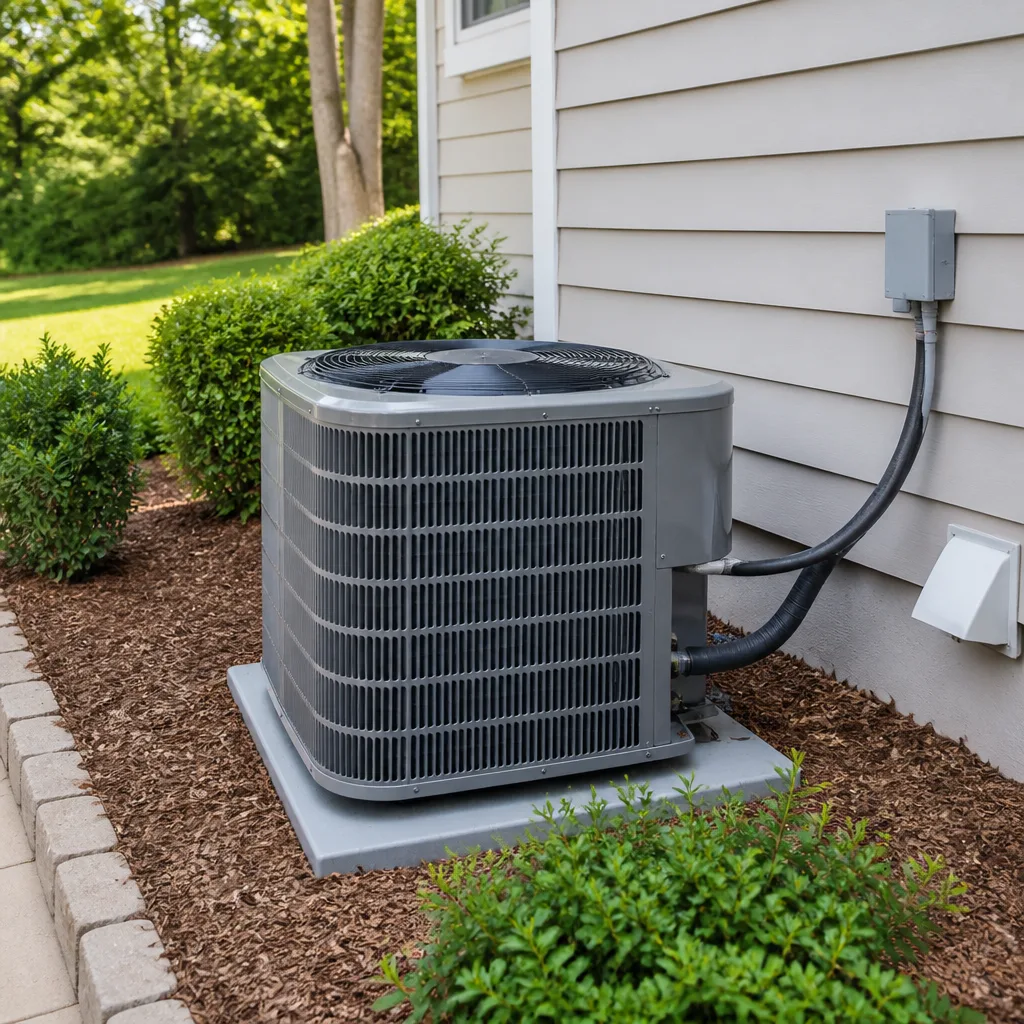 AC repair
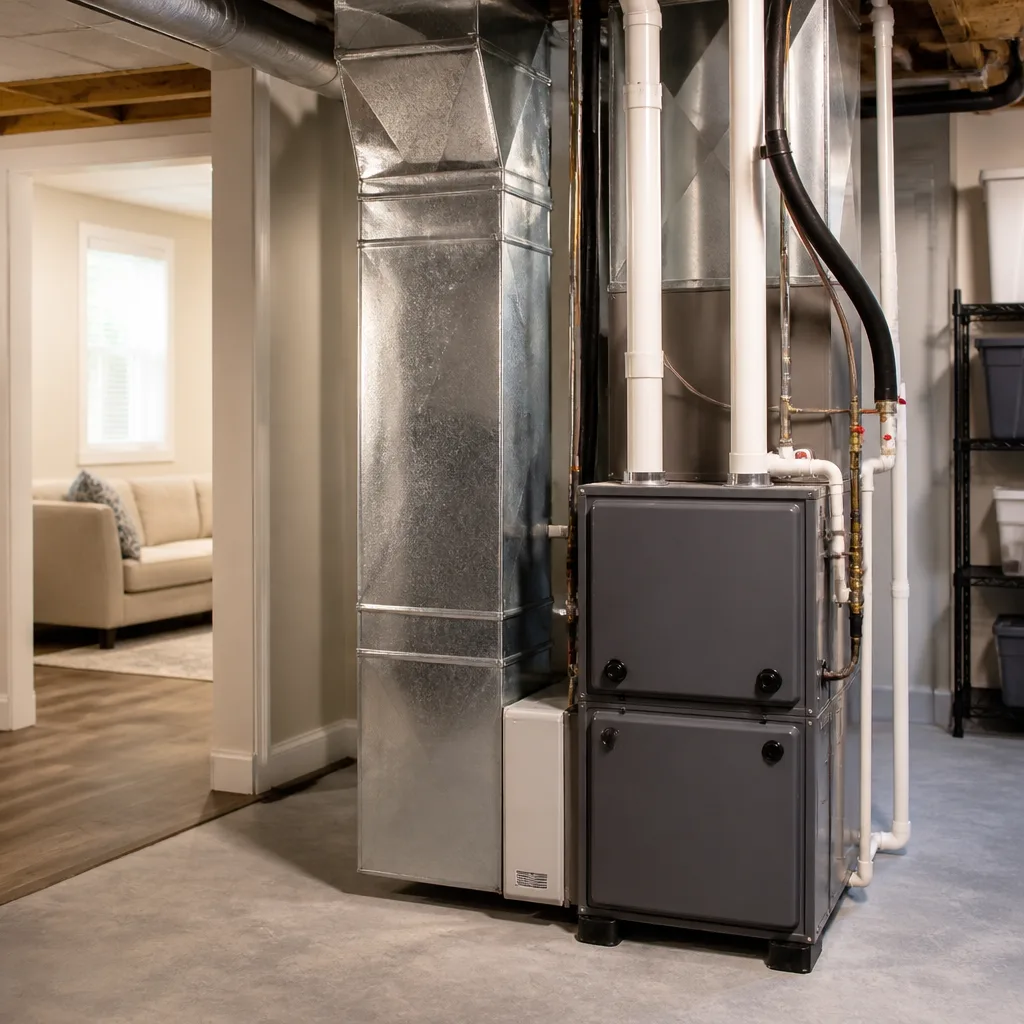 Furnace & heating
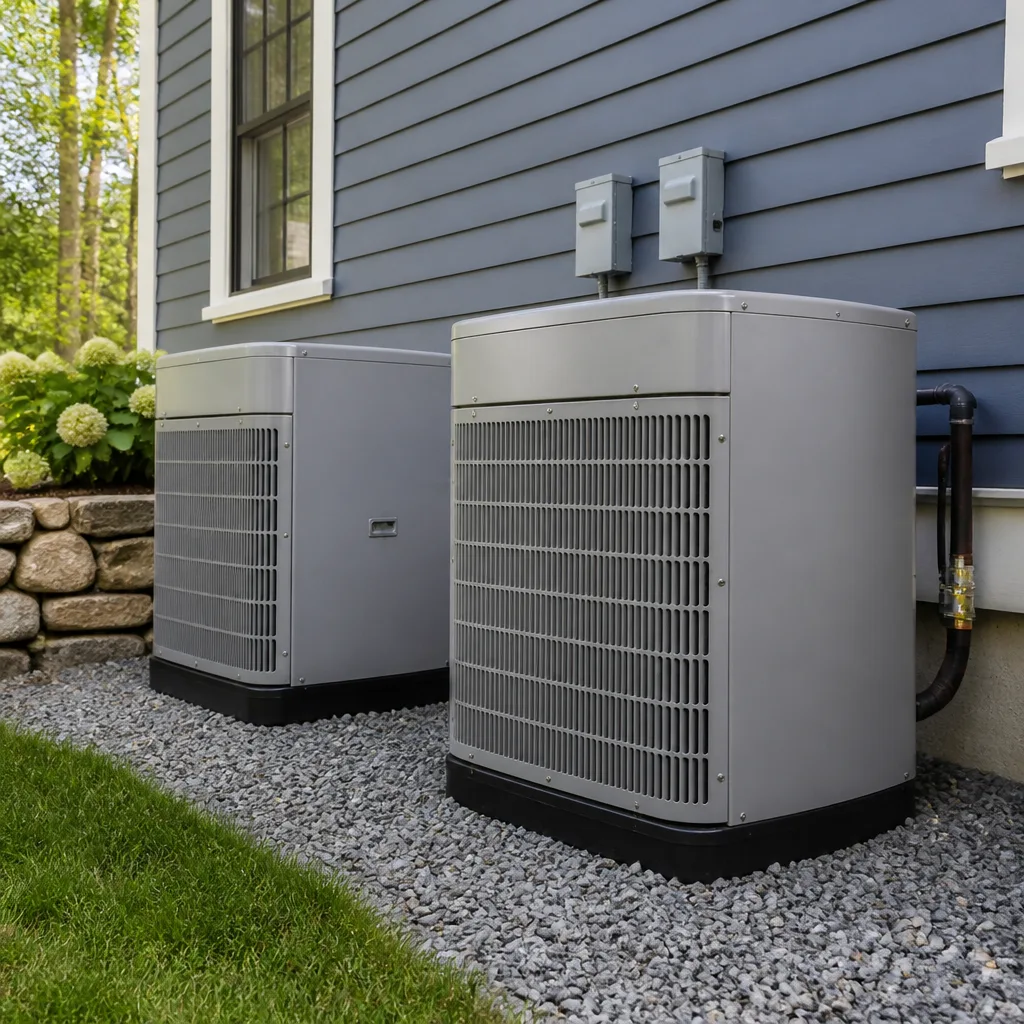 Heat pumps
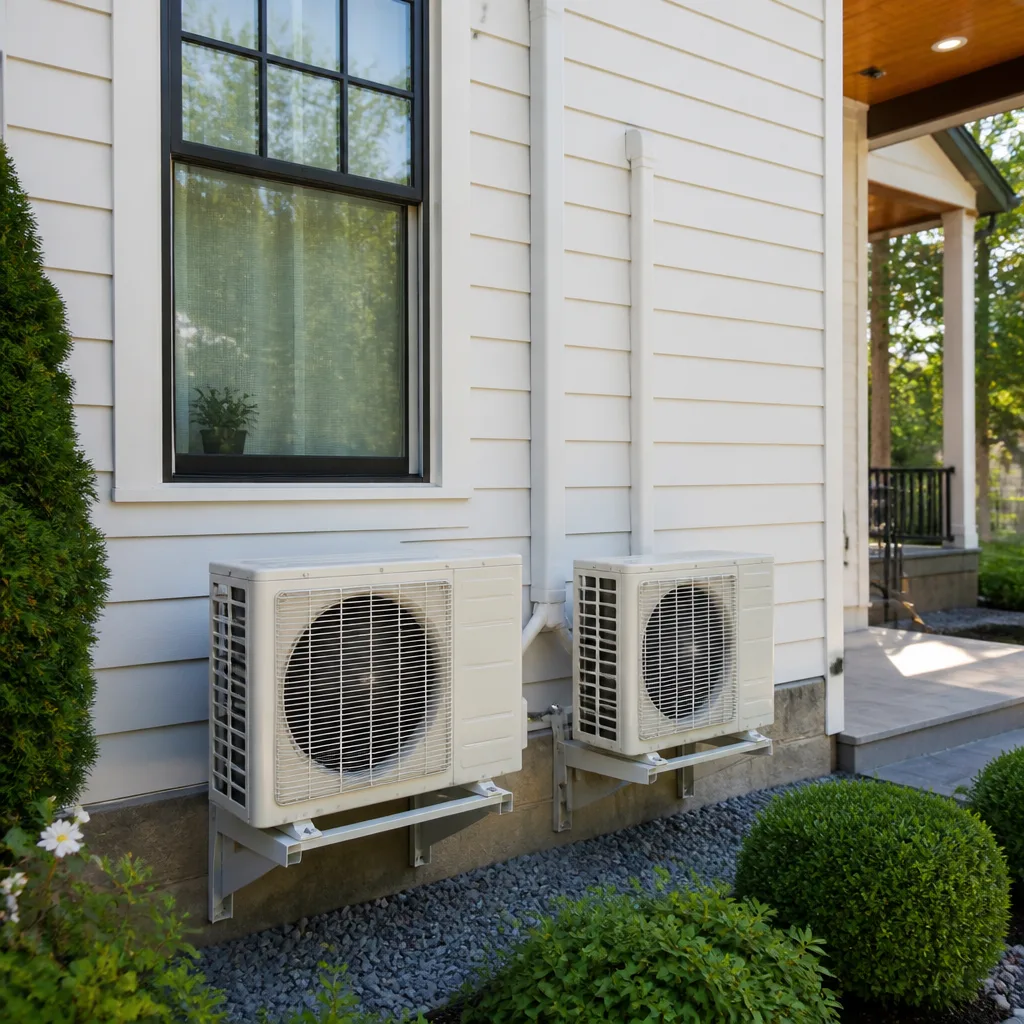 Ductless mini splits
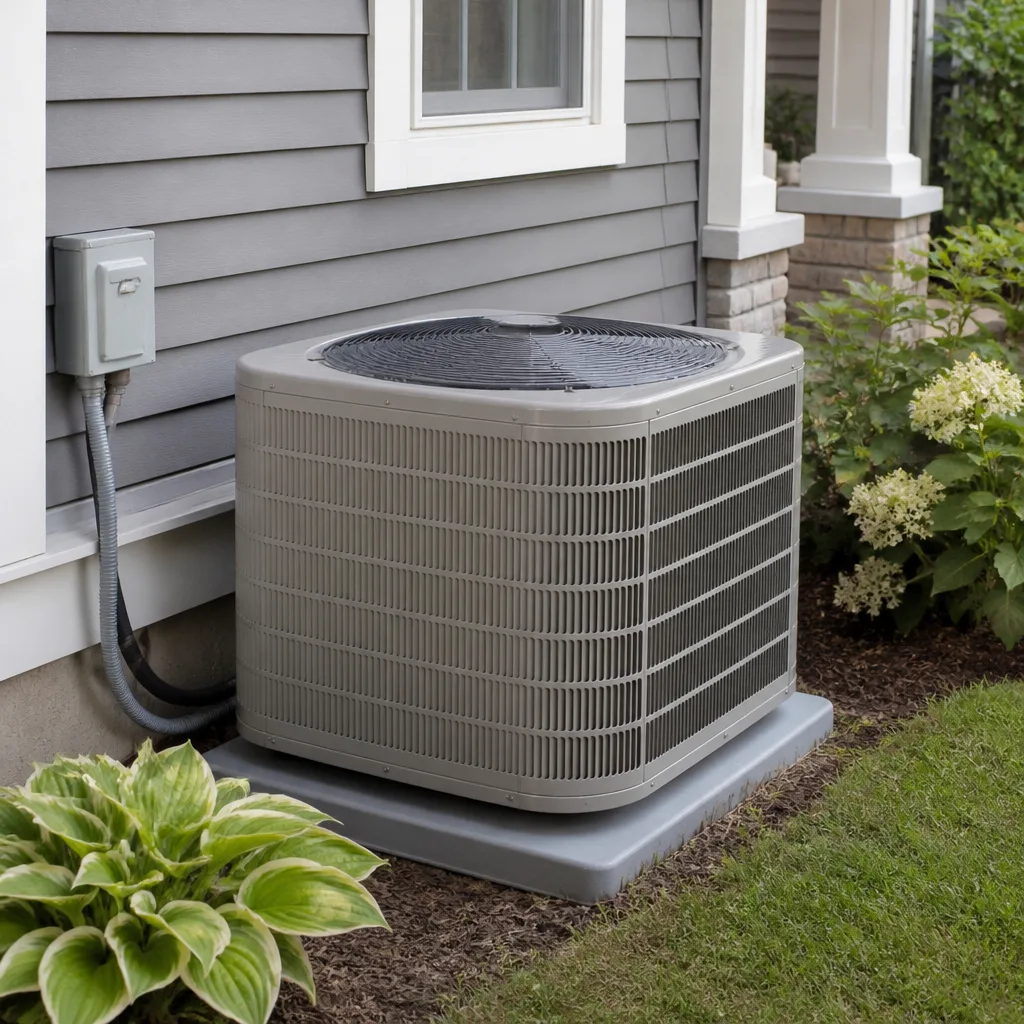 Carrier
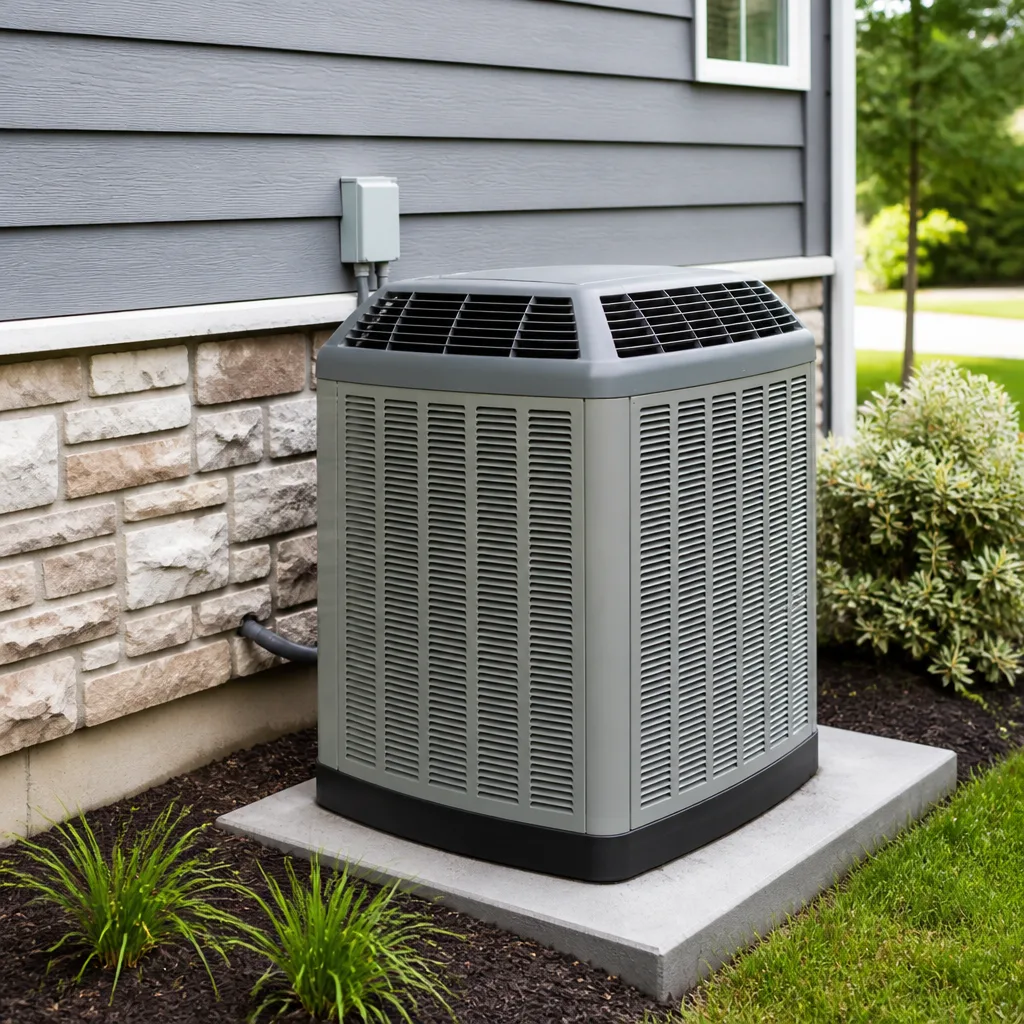 Trane
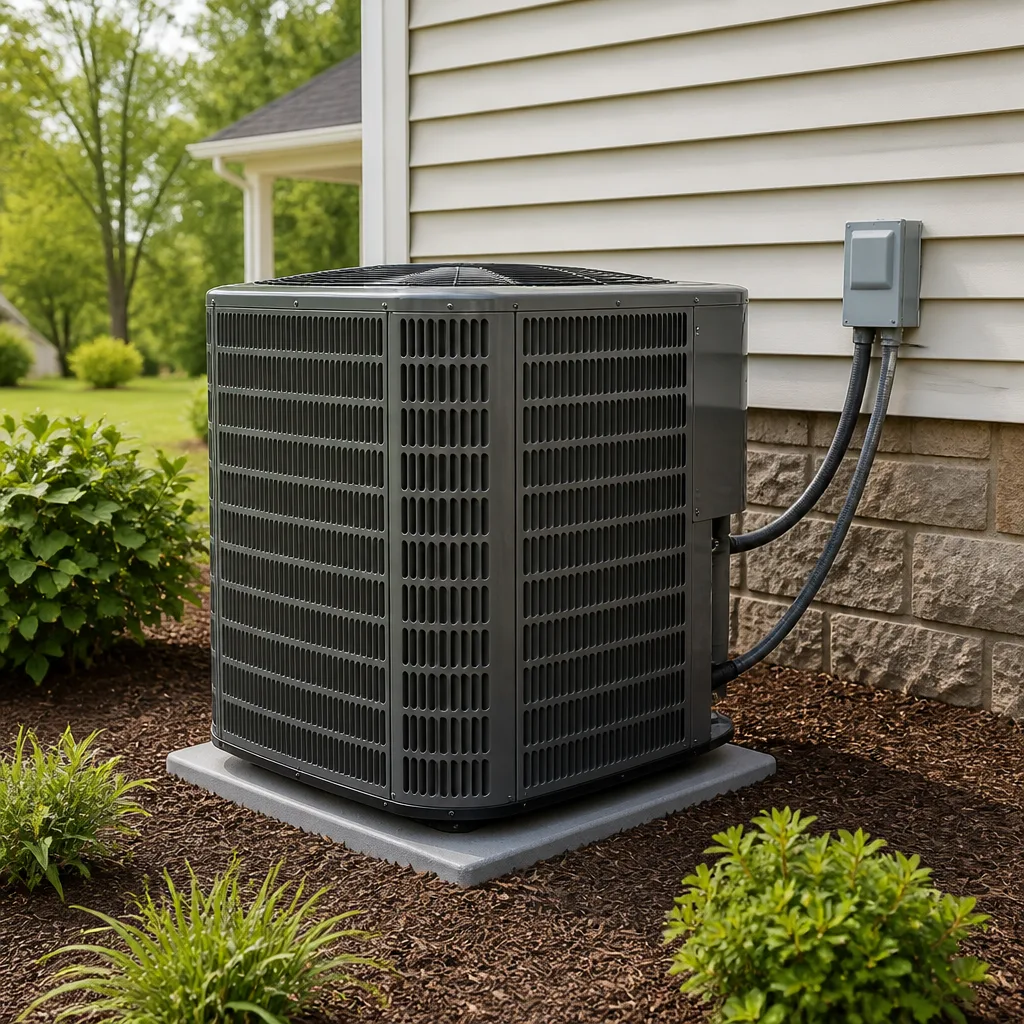 Goodman
Seasonal tune-up and full diagnostic on your Carrier, Trane, or Goodman system - readings shown to you before any repair is proposed
Diagnosis first, numbers second - you approve the repair price before a single part goes in.
Get your free estimateThe Complete Guide to HVAC in North Las Vegas
The average North Las Vegas home runs its air conditioner roughly 2,100 hours per year. That’s nearly triple the annual workload of a system in Atlanta. Most HVAC advice on the internet was written for a milder climate, where equipment coasts for a few months and rests the rest of the year. Here, your system lives in a furnace of heat, airborne grit, and mineral-heavy water that quietly attacks components year-round. This guide explains what actually wears out HVAC equipment in this valley, what you can do about it, and when a repair is the smarter money.
Styles & brands we work with
- AC repair
- Furnace & heating
- Heat pumps
- Ductless mini splits
- Carrier
- Trane
- Goodman
Quick Answer
HVAC in North Las Vegas demands more from equipment than almost anywhere else in the country. The combination of 100°F-plus summer days, fine Mojave dust, hard water, and caliche soil means systems here need stronger filtration, more frequent coil cleaning, and a technician who understands local failure patterns. The best path to a long-lasting system is not a specific brand. It’s correct sizing, honest repair-first diagnosis, and maintenance timed to the desert’s actual seasons.
Table of Contents
- What Caliche Soil Does to Your Condenser
- Mojave Dust: The Airborne Abrasive That Quietly Kills Coils
- Hard Water, Evaporative Coolers, and Refrigerant Systems
- Equipment Sizing and Why NV Energy Rate Tiers Matter
- Multi-Brand Homes: Fast-Built Subdivisions and Mismatched Components
- Repair vs. Replacement: A Straightforward Framework
- What a Desert-Tuned Maintenance Visit Actually Covers
- Common Mistakes to Avoid
- When to Call a Professional
- Frequently Asked Questions
- The Bottom Line
We’re Stratford AC Repair, and we work on residential heating and cooling systems across North Las Vegas. This guide is what we have learned from years of diagnosing failed compressors, clogged coils, and undersized units in this specific corner of the Mojave.
What Caliche Soil Does to Your Condenser
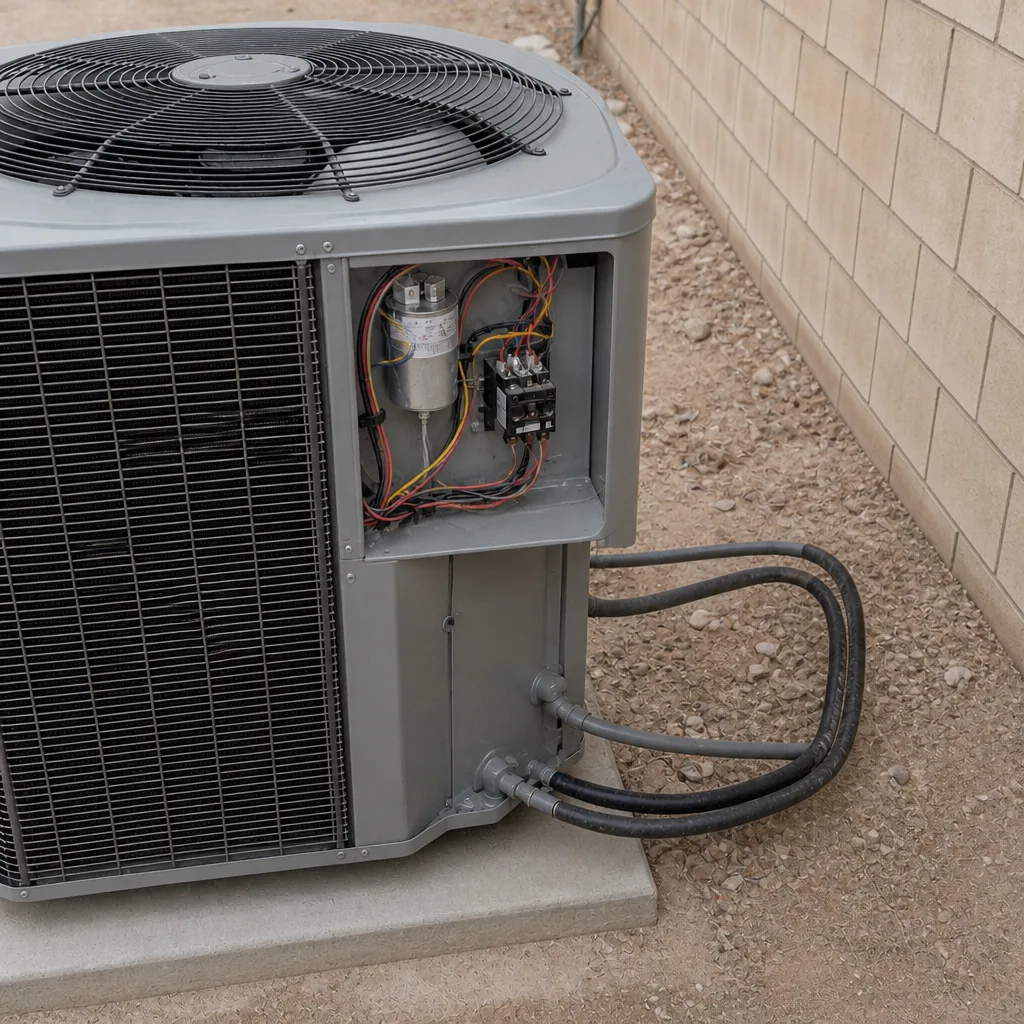
Most national HVAC guides never mention the ground your condenser sits on. That is a significant oversight in North Las Vegas. Much of the valley floor here is capped by caliche, a hardened deposit of calcium carbonate that forms a cement-like layer anywhere from a few inches to several feet below the surface. Caliche does two things to an air conditioner. First, it reflects heat. A condenser pad poured directly over caliche radiates more heat upward into the unit than grass or loose soil ever would. Second, caliche is alkaline. Wind-driven dust from exposed caliche carries fine calcium particles that settle on coil fins and bake on under direct sun.
What this means in practice:
- Ground-level condensers in North Las Vegas run hotter than the same unit in a coastal city with identical air temperatures.
- Caliche dust, once it gets wet from condensation or a rare rain shower, begins to harden on the coil surface. It acts like a thin layer of plaster.
- Airflow through the coil drops long before a visual inspection shows serious dirt. The coil can look dusty but not terrible while efficiency has fallen 15 to 20 percent.
- Condenser pads poured over caliche often develop cracks from thermal expansion. A cracked pad eventually shifts the unit, putting strain on the refrigerant lines.
The fix is not complicated. Elevate the condenser at least a foot off the ground on a stable, level pad with good drainage. Clean the coil before it looks bad. In our experience across North Las Vegas, units with bottom-side caliche dust accumulation are the single most common cause of reduced cooling output in homes that are only five or six years old.
Mojave Dust: The Airborne Abrasive That Quietly Kills Coils
North Las Vegas does not just get dust. It gets Mojave dust events that lift a specific mix of fine quartz, feldspar, and calcium carbonate into the air. These particles are smaller and harder than the everyday lint and pollen that HVAC guides typically address. Quartz in particular is abrasive. When a dust event pushes this material through an outdoor condenser coil, the particles do not just rest on the surface. They scour the thin aluminum fins as the fan pulls them through at speed.
This changes how you should think about maintenance. A standard fiberglass filter in the return grille catches some household dust. It catches almost none of the sub-10-micron quartz that enters the system from outside. The real point of attack is the condenser coil and the evaporator coil. Over two or three summers, repeated dust exposure leaves a coating that reduces heat transfer and forces the compressor to run longer to hit the same thermostat setting.
Here is the step-by-step reality of what we do on a system that has been through a few North Las Vegas dust seasons:
- Shut down power to the condenser and inspect the coil surface for a hardened film. If the dust layer resists a simple brush, it has likely been baked on by months of heat.
- Apply a coil-specific cleaning agent and let it dwell long enough to break the bond. Water pressure must stay moderate. High pressure folds the fins and makes the problem worse.
- Flush from the inside out, not the outside in. Spraying from the outside drives particles deeper. Flushing from the fan side pushes them back out the way they came.
- Straighten any fins that have been pressed over by years of wind and debris, then verify the refrigerant pressures. A coil that runs dirty for a long time often runs with abnormal pressures even after cleaning.
If you live on a corner lot or near any of the open desert edges of North Las Vegas, you will need coil cleaning more often than the standard once-a-year recommendation. Twice a year is not excessive for homes that face prevailing winds off open ground.
Hard Water, Evaporative Coolers, and Refrigerant Systems
North Las Vegas tap water is hard. That is not an opinion. The valley’s water contains high concentrations of dissolved calcium and magnesium. This matters for HVAC in two very different ways depending on the technology your home uses.
For homes with evaporative coolers, sometimes called swamp coolers, hard water is a direct operational problem. As water flows over the cooler pads and evaporates, the minerals do not evaporate with it. They stay behind and accumulate. Within a single summer, pads can become stiff, crusted, and far less absorbent. Mineral buildup on the water distribution lines clogs the small holes that keep pads evenly wetted. The result is a cooler that blows warm air and uses more water while cooling less. Pad replacement becomes an annual necessity, not a suggestion.
For homes with refrigerant-based air conditioning, hard water matters indirectly. It affects any component that sees water contact. That includes condensate drain lines, which can clog faster when mineral-heavy water evaporates and leaves scale behind. It also affects outdoor condenser coils when homeowners or landscapers spray them down with untreated tap water and then let the water evaporate in the sun. The same calcium that fogs a shower door will fog a coil.
Which technology is actually the smarter choice in North Las Vegas? Evaporative coolers use far less electricity and work well when the air is dry, which it usually is here until the monsoon season pushes humidity higher in July and August. Refrigerant systems cool effectively regardless of humidity and filter air much better. For most newer homes in North Las Vegas, refrigerant-based central air is the standard. But for older homes or smaller spaces, an evaporative cooler can be a reasonable seasonal alternative if you are willing to replace pads and service the water distribution system each year. The mistake is trying to run an evaporative cooler through the humid weeks and expecting it to keep up.
Equipment Sizing and Why NV Energy Rate Tiers Matter
North Las Vegas sits inside NV Energy’s service territory, where residential electricity pricing is tiered. The more you use, the more you pay per kilowatt-hour once you cross into the higher tiers. This turns equipment sizing into a financial decision, not just a comfort decision.
An air conditioner that is too small will never satisfy the thermostat on a 110°F afternoon. It will run continuously, push the household into higher rate tiers, and return disappointing cooling. An air conditioner that is too large creates a different problem. It short-cycles, meaning it blasts cold air for a few minutes, shuts off, and starts again. Short-cycling prevents the system from removing humidity during the monsoon weeks, causes uncomfortable temperature swings between rooms, and increases wear on the compressor. It also still costs money, because every start-up draws a spike of electricity.
The sizing answer is never a rule of thumb pulled from a national guide. It starts with a load calculation that accounts for square footage, window area and orientation, insulation, ceiling height, and the specific heat profile of North Las Vegas. Houses with west-facing windows and little shade need a different calculation than the same floor plan facing north. When we look at an AC installation in North Las Vegas, we run the numbers for the actual house. We do not pull a tonnage figure from a chart based on square footage alone.
Why this matters financially: a correctly sized system runs longer, more efficient cycles and avoids both extremes of the rate-tier trap. It costs more to install than a guess-sized unit sometimes does. But it costs less to operate, and it lasts longer because the compressor is not being cycled to death.
Multi-Brand Homes: Fast-Built Subdivisions and Mismatched Components
North Las Vegas grew quickly. Entire subdivisions went up in waves, and builders installed whatever equipment was available at the best bulk price at that moment. The result is a housing stock with enormous brand diversity. Carrier and Goodman and Lennox and Rheem sit side by side on the same block, and inside any single home the condenser outside might not match the evaporator coil inside. Homeowners frequently do not know what brand they have, and they should not need to.
This is where the difference between a single-brand dealer and a multi-brand AC repair company becomes practical. A technician who only works on one manufacturer’s equipment will often tell you a mismatched system is unworkable or needs a paired replacement. A technician who works across brands can diagnose the actual problem: the compressor, the fan motor, the capacitor, the control board, the refrigerant charge. We are certified to service nine of the most widely installed brands in North Las Vegas homes: Carrier, Trane, Lennox, Goodman, Rheem, York, Daikin, Bryant, and American Standard. That covers the overwhelming majority of what is actually installed out here.
The repair-first mindset follows from this. When a compressor fails on a York unit, we quote the compressor. When a blower motor fails on a Bryant furnace, we quote the motor. We assess whether a fix is viable before steering any conversation toward replacement. Some companies are structured to sell new equipment because selling new equipment is easier than diagnosing a problem. That is not how we run our service calls.
Repair vs. Replacement: A Straightforward Framework
Every homeowner eventually faces the question: fix this or replace it. The answer in North Las Vegas comes down to three factors, and brand loyalty is not one of them.
- Age of the system. Most central air conditioners in this climate last between 12 and 15 years with proper maintenance. A system that is 10 years old with a failed compressor is a borderline call. A system that is 7 years old with a failed capacitor is an easy repair. We tell customers the actual age range and let the numbers do the work.
- Cost of the repair relative to the remaining life of the unit. A $400 repair on a 12-year-old system that will likely need more work in a year or two may still be worth doing if money is tight and the system is otherwise sound. A $2,200 repair on the same unit is harder to justify. The calculation is not a formula. It is a conversation based on what we find.
- Efficiency difference. Replacing a 14-year-old system with a modern unit can significantly reduce summer electricity use, especially for homes that run air conditioning for 2,100 hours per year. The savings are real under NV Energy’s tiered rates. But they take years to recover the installation cost, and paying for a full replacement to fix a bad capacitor is never the right move.
If you are considering a new AC installation, our advice is to first confirm the existing system is actually beyond reasonable repair. Some companies will quote a replacement before checking the simplest failure points. We will not.
What a Desert-Tuned Maintenance Visit Actually Covers
A maintenance visit in North Las Vegas should not look like a generic 20-point checklist. It should be designed around the specific things that fail here: dust load, hard water scale, caliche heat reflection, and electrical connections that have baked through several summers. Here is what we focus on when we service a system in this climate:
- Outdoor coil condition and cleaning. As covered above, the biggest local killer of efficiency is a coil that looks passable but has a fine layer of hardened desert dust. We clean coils before they look dirty.
- Condensate drain inspection. Hard water scale builds in drain lines and pans faster here than most places. A clogged drain in July means water damage to the ceiling or the mechanical closet. We flush the line and check for scale.
- Capacitor testing. Heat kills capacitors. A capacitor that is weakening will fail on the hottest day of the year, not the coolest. We test capacitance under load and flag any component that is outside tolerance.
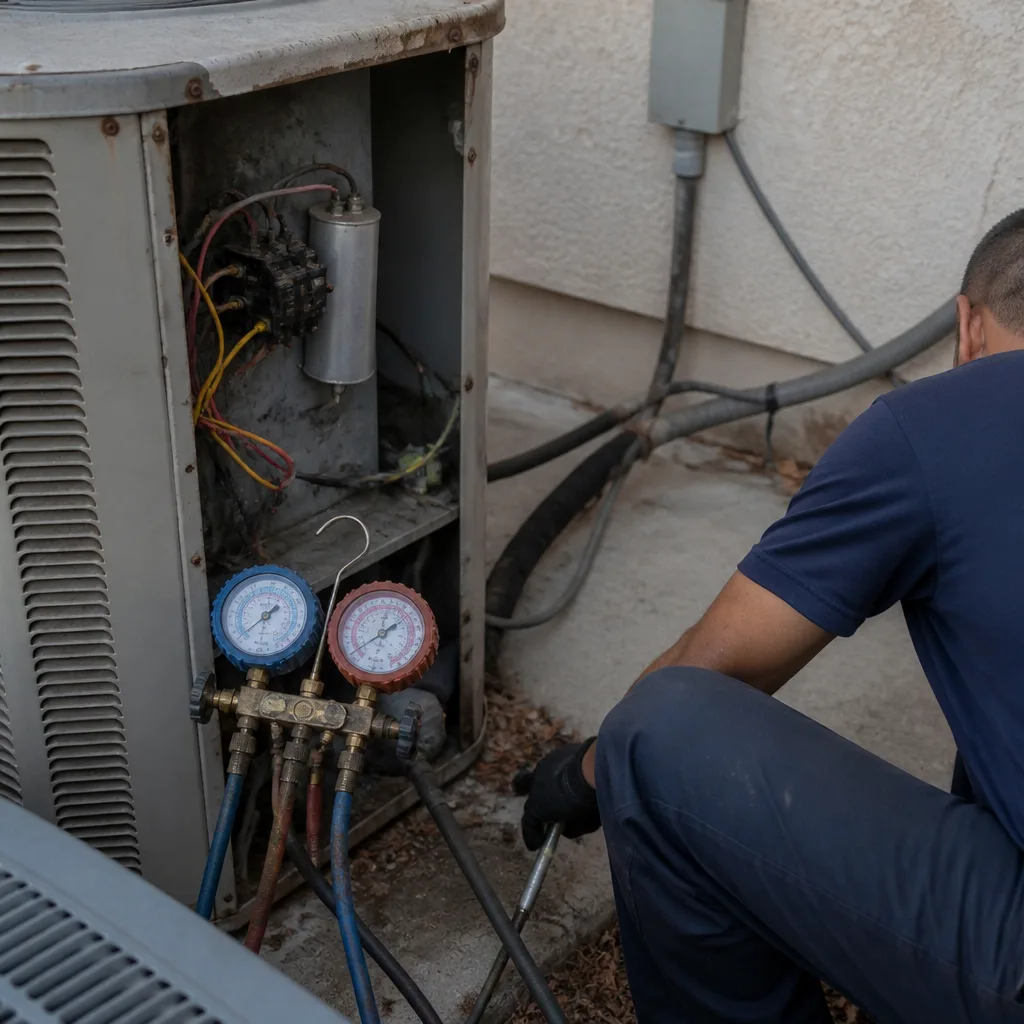
- Refrigerant pressure check. A system two pounds low on refrigerant will cool, but poorly, and the compressor will run hot. We verify pressures and subcooling or superheat against the manufacturer’s spec, not against a generic chart.
- Filter replacement and airflow measurement. A dirty filter on a 110-degree day is a burnout waiting to happen. We replace standard filters and confirm airflow across the evaporator.
- Electrical connection torque. Thermal cycling loosens lugs. Loose connections create resistance, which creates heat, which creates failures. We check the disconnect, contactor, and capacitor wiring.
One thing worth stating plainly: our technicians are not paid on what they sell. When we perform a maintenance visit, we write up what we find. If the system is clean, we say so. If something is failing, we show you the measurement and explain what it means. What you do with that information is your call.
Common Mistakes to Avoid
After years of working on HVAC systems in North Las Vegas, these are the mistakes we see most often. Every one of them is avoidable.
- Shutting vents in unused rooms. It feels like a savings move. It actually raises static pressure in the ductwork, reduces airflow across the evaporator coil, and can cause the coil to freeze on hot days. Leave the vents open.
- Replacing a filter only once a year. In this dust climate, a standard 1-inch filter needs replacement every one to three months, depending on occupants, pets, and proximity to open desert. A clogged filter drives up energy use and strains the blower motor.
- Hosing down a hot condenser with tap water. The thermal shock can crack a hot coil, and the hard water leaves mineral spots that attract more dust. Always clean coils with the power off and with a proper coil cleaner, not a garden hose and a prayer.
- Ignoring a system that is running but not quite keeping up. An AC unit that runs constantly but holds 78°F instead of 75°F is trying to tell you something. It may be low on refrigerant, the coil may be clogged, or the ductwork may be leaking. The longer it runs in that state, the more expensive the eventual repair.
- Assuming a new home has a correctly sized system. Fast-built subdivisions in North Las Vegas have a lot of three-ton systems on houses that really need three and a half. The system works, but it never quite does the job on the worst days. When the home is new to you, have the system evaluated.
- Replacing a major component without checking the matching component. A new outdoor unit paired with an old indoor coil is a recipe for refrigerant mismatch and early failure. When a replacement is necessary, make sure the indoor and outdoor sides are compatible. A technician who works across brands can assess this without trying to sell a full paired system when it is not needed.
- Neglecting the thermostat location. A thermostat mounted on a wall that gets direct afternoon sun will read the wall temperature, not the room temperature. The system will short-cycle or run too long depending on the time of day. Simple thermostat relocation sometimes solves a comfort complaint without any refrigerant work.
When to Call a Professional
Some things are worth checking yourself: the filter, the thermostat setting, the circuit breaker, whether the drain pan under the indoor unit is overflowing. Most things beyond that are not. If the system is blowing warm air, if the outdoor unit is making a grinding or buzzing sound, if the breaker trips repeatedly, or if you see ice on the copper lines, you need a trained technician. Refrigerant handling requires EPA certification. High-voltage electrical work on a condenser should not be a homeowner project. And a compressor that is running with a severe leak or an electrical fault can be destroyed in a single afternoon of continued operation.
Stratford AC Repair offers free estimates in North Las Vegas. Call (844) 731-3077 and we will send a technician who can diagnose the system you actually have, regardless of brand.
Frequently Asked Questions
A well-maintained central air conditioner in North Las Vegas typically lasts 12 to 15 years, while a furnace often reaches 18 to 20 years because it gets much less use. Systems that are run hard without regular coil cleaning and filter changes can fail in as few as 8 years. The workload here is higher than most of the country, so maintenance matters more than it would in a milder climate. If your system is nearing the end of that range and needs a major repair, call (844) 731-3077 for an honest assessment of whether fixing or replacing makes more sense.
At least once a year, and ideally twice for homes near open desert or on corner lots exposed to wind-driven dust. A pre-season check before the first real heat wave catches most problems before the system is under full load. A mid-summer check catches dust accumulation and refrigerant issues that developed during the hardest months. Homes with heavy dust exposure and hard water conditions benefit from a second visit simply because the coil loads build faster here.
A system that runs constantly but cannot reach the set temperature is usually low on refrigerant, has a dirty outdoor coil, or has an undersized unit for the home. In North Las Vegas, caliche dust baked onto the coil is a common culprit that looks minor from the outside but blocks significant heat transfer. A technician can check the refrigerant pressures, clean the coil, and measure the actual airflow to isolate the cause. Do not assume the system is simply too old. Most constant-running complaints have a specific, fixable cause.
That depends on when you need cooling. Evaporative coolers work well in the dry heat of May and June and use much less electricity. They lose effectiveness during the humid monsoon weeks of July and August. Central air conditions regardless of humidity and filters the air far better, which matters during dust events. If you only need cooling during the driest months and you are diligent about pad replacement and hard water maintenance, an evaporative cooler can work. If you want set-and-forget cooling through the entire summer, refrigerant-based central air is the more dependable choice.
The answer depends on the failure, but as a starting point: a capacitor replacement typically falls under $300, a contactor or condenser fan motor under $400, and a compressor replacement usually runs several thousand dollars depending on the system. A basic diagnostic visit with Stratford AC Repair is free with the repair. These are estimates, not quotes. Every system is different, and the written estimate you receive before any work begins is the price. Call (844) 731-3077 if your system is acting up and you want a real number instead of a range.
Yes. We are certified to work on Carrier, Trane, Lennox, Goodman, Rheem, York, Daikin, Bryant, and American Standard equipment, and we diagnose what is in front of us. Many homes in North Las Vegas have mismatched indoor and outdoor components from different manufacturers, installed by builders over the years. A brand-specific dealer may struggle with that. A technician who is qualified across nine major brands will not.
The Bottom Line
HVAC in North Las Vegas is not a simple matter of picking a reliable brand and scheduling a tune-up once a year. The desert imposes specific stresses: caliche heat reflection, abrasive Mojave dust, hard water scale, and a summer workload that dwarfs most of the country. The systems that last here are the ones sized correctly for the actual house, cleaned before they look dirty, and repaired honestly when components fail. The brand on the cabinet matters far less than the technician who works on it. One call to (844) 731-3077 covers your AC and your furnace, no matter what brand is installed. That is how it should work.
Written by the team at Stratford AC Repair, serving North Las Vegas since 2015.
See the difference
 Before
 After
 Before
 After
 Before
 After